It’s thrilling to introduce a new product or increase production capacity, but there are drawbacks as well, particularly with regard to packaging. Product quality, brand presentation, and efficiency all depend on a well-designed packaging line.
G-TECH Packaging India Pvt. Ltd. specializes in designing high-performance, customized packaging machines that assist companies in establishing dependable and efficient production lines for a variety of industries, including pharmaceuticals, edible oil, agrochemicals, cosmetics, and more.
Here is a detailed guide to establishing your first packaging line, regardless of whether you are an established manufacturer or a start-up.
Step 1: Establish Your Needs for Packaging
Clearly defining your needs is crucial before making any machinery investments.
Consider this:
- What kind of goods are you going to package? (liquids, granules, powders, etc.)
- Which shapes and sizes of containers are you going to use? (jars, pouches, bottles, etc.)
- What daily or monthly production volume do you anticipate?
- Do you have to adhere to any particular regulatory standards, such as FSSAI for food or GMP for pharmaceuticals?
- For instance, you will require a high-accuracy filling machine, a capping machine to safely seal bottles, and labeling machines to apply compliance and branding labels if you are packaging edible oil.
- In order to optimize productivity, G-TECH assists customers in analyzing these needs and suggesting the ideal machine combinations.
Step 2: Select the Appropriate Packaging Equipment
The next step is to choose the appropriate machines for each packaging stage after your requirements are clear.
Typically, a full packaging line consists of:
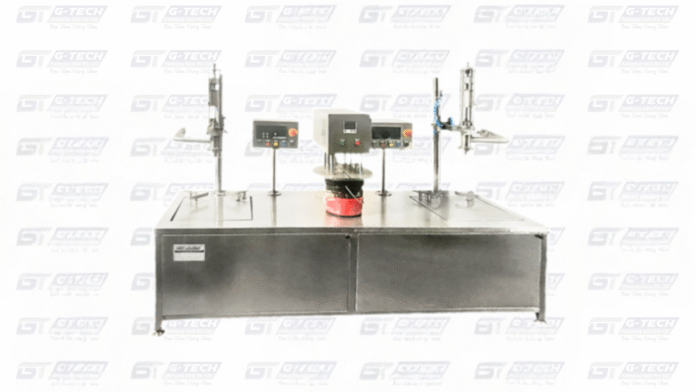
- A filling machine precisely fills bottles or other containers with liquid or semi-liquid substances.
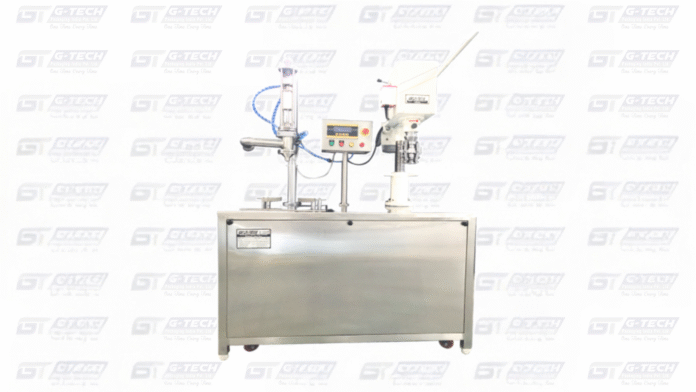
For example, the G-TECH 8-Head Servo Filling Machine can precisely fill containers ranging in capacity from 500 milliliters to five liter. - A capping machine uses caps to seal the container and stop leaks and contamination.
For reliable sealing, consider the G-TECH Automatic Single Head Capping Machine. - For safety and longer shelf life, an induction cap sealer offers tamper-proof sealing.
For instance, the G-TECH Jet Air Cool Induction Cap Sealer. - A labeling machine applies labels precisely to improve branding and adhere to regulations.
The G-TECH Automatic Sticker Labeling Machine is one example.
💡 Expert Advice: Select modular equipment that can expand with your company. G-TECH creates machines that are adaptable, robust, and prepared for the future.
Step 3: Create a Packaging Line Layout Plan
- The efficiency of your production line is greatly influenced by its layout.
- Important Points to Remember:
- To prevent bottlenecks, make sure the product flows smoothly.
- Provide enough room for operators to work safely and comfortably.
- Observe industry hygienic guidelines, particularly for pharmaceutical and food items.
- At G-TECH, we offer layout advice to maximize available space and boost output.
Step 4: Set Up and Examine the Devices
- It’s time for testing and installation after the machines arrive.
- Our G-TECH technical staff guarantees:
- installation of every machine correctly.
- adherence to safety and electrical regulations.
- Trial runs are used to confirm accuracy and performance.
- For efficient daily operations, initial operator training is necessary.
- To guarantee that your line operates as efficiently as possible from day one, this step is essential.
Step 5: Educate Your Group
- Skilled operators are required for even the most sophisticated packaging machines.
- We offer thorough instruction that covers:
- Procedures for machine operation and safety.
- simple troubleshooting.
- methods for preventive maintenance.
- This gives your team the ability to increase productivity and decrease downtime.
Step 6: Consistently Maintain and Upgrade
- A packaging line requires sustained investment. To guarantee that it keeps performing at a high level:
- Adhere to a routine maintenance plan.
- Stock up on spare parts so you can replace them quickly.
- As your production needs increase, upgrade your machinery.
- G-TECH offers spare parts, after-sales support, and professional advice to ensure your line continues to function properly for many years.
Why Start Your First Packaging Line with G-TECH Packaging?
- It can be intimidating to set up your first packaging line, but G-TECH offers a comprehensive, worry-free solution:
- machines that are specially designed to meet your needs.
- complete services, including installation, training, and consultation.
- demonstrated proficiency in a variety of industries.
- international norms for innovation, safety, and quality.
- With our assistance and technology, you can concentrate on expanding your company while we handle your packaging requirements.
In conclusion
Setting up a packaging line is a crucial milestone for any manufacturer. These procedures will help you guarantee a seamless, effective, and scalable setup that elevates your production to the next level. You can also work with a reliable specialist like G-TECH Packaging India Pvt. Ltd.
🚀 Are you prepared to launch your first packaging line?
Get in touch with G-TECH Packaging India Pvt. Ltd. right now, and together, let’s create your success!