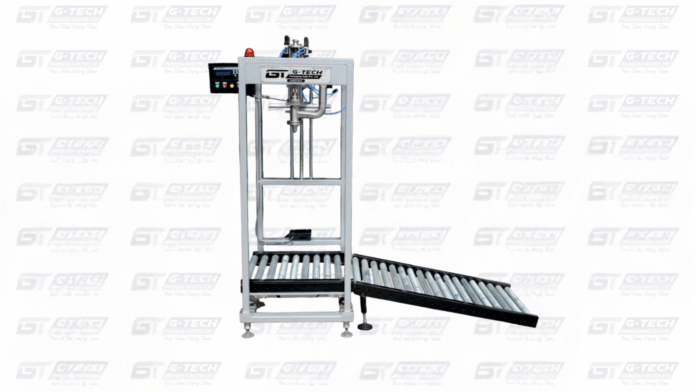

When manufacturers think about packaging automation, filling usually gets the spotlight. But capping and labeling are just as critical — a perfectly filled bottle with a loose cap or a crooked label undoes all that precision in seconds.
Why Capping Quality Matters More Than It Seems
A cap isn’t just a lid — it’s a seal against leakage, contamination, and tampering during transport and storage. Inconsistent capping torque is one of the most common (and most overlooked) causes of customer complaints in liquid packaging, from lubricant cans leaking in transit to pharma bottles failing tamper-evidence checks.
Automatic capping machines solve this by applying consistent torque across every unit, regardless of operator fatigue or shift changes. Linear capping systems, in particular, are popular because they integrate easily into existing conveyor lines and handle multiple cap types — screw caps, snap-on caps, ROPP caps — without major retooling.
Labeling: Where Branding Meets Compliance
Labels do two jobs at once: they sell the product on the shelf, and they carry mandatory compliance information (batch numbers, MRP, manufacturing dates, safety warnings). A misaligned or smudged label can mean:
- Rejected stock at retail
- Regulatory non-compliance flags
- A weaker shelf presence next to competitors
Automatic labeling machines—including BOPP and wrap-around labelers — apply labels at consistent speed and position, which matters enormously once a brand is shipping thousands of units a day across multiple SKUs.
The Real Advantage: A Connected Line
The biggest gains don’t come from automating capping or labeling in isolation — they come from connecting filling, capping, sealing, and labeling into one continuous line. When these stations are synchronized:
- Bottles move through without manual handoffs (less contamination risk)
- Line speed is limited by the slowest station, not by manual bottlenecks
- Output is far more consistent batch to batch
Final Thought
If you’re scaling production, look at your line holistically rather than upgrading filling alone. A fast filler feeding into a slow, inconsistent capping or labeling station just shifts the bottleneck downstream — it doesn’t remove it.