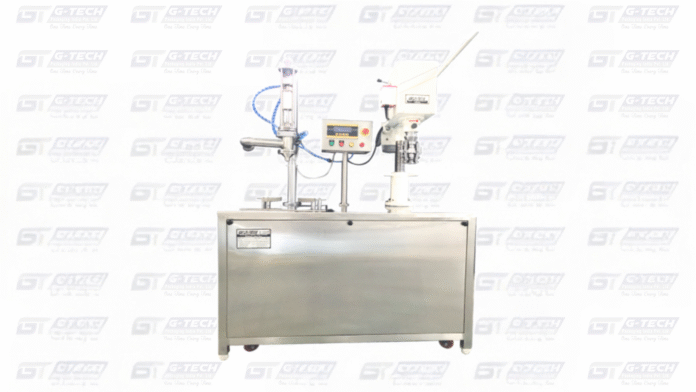
Hair oil is a staple in Indian homes, from plain coconut oil to amla, almond, onion and many Ayurvedic herbal blends. For brands, this means high volumes, many bottle sizes and strong competition on the shelf. A reliable hair oil filling machine helps you fill every bottle accurately, keep the outside of the bottle clean and scale up without adding more hand labour.
This guide explains how to choose a hair oil filling machine for your plant, whether you are a growing D2C brand or an established FMCG supplier.
What Makes Hair Oil Different to Fill
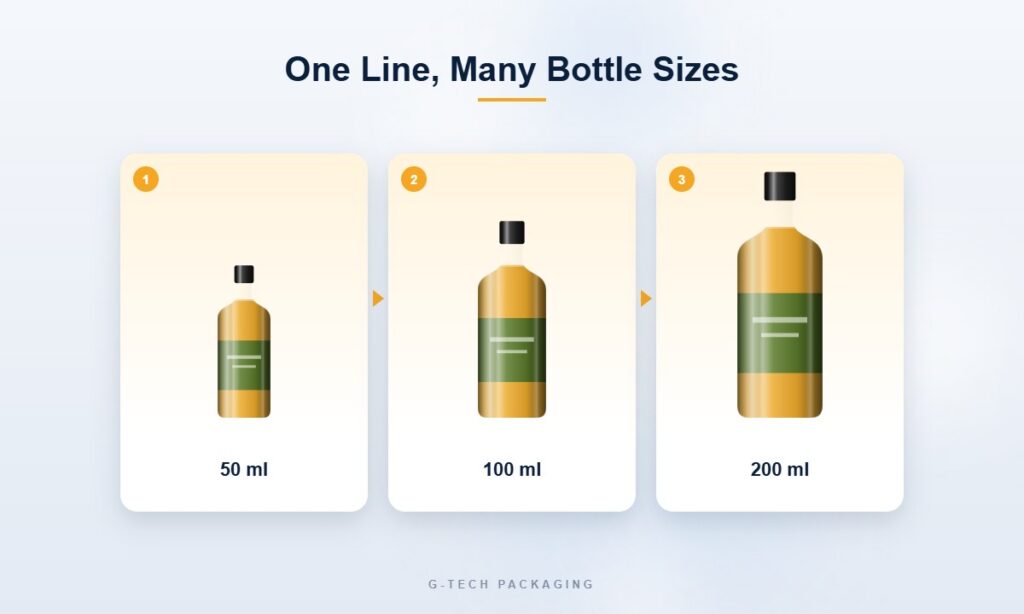
- Many pack sizes: most brands run small trial packs, regular sizes and family packs, often all in the same month.
- Clear PET bottles: any drip, smear or uneven fill level is clearly visible to the customer.
- Changing viscosity: coconut oil thickens in cold weather, while light herbal oils flow freely.
- Herbal particles: some Ayurvedic oils carry fine herbal residue that can block narrow nozzles if not filtered.
- Oil on surfaces: oily bottles cause labels to lift and caps to feel greasy.
Filling Methods for Hair Oil
The table below compares common approaches. The right choice depends on your output, bottle range and accuracy needs.
| Method | How it works | Good for |
|---|---|---|
| Volumetric piston filling | A piston draws and pushes a set volume of oil | Consistent volume, frequent size changes, medium speeds |
| Servo pump filling | A servo-driven pump doses the set volume | Quick size changes from the control panel, smooth filling |
| Gravity or time-based filling | Oil flows from an overhead tank for a set time | Thin oils and simple, economical setups |
| Weighmetric filling | Each bottle is filled by weight on a load cell | Larger packs and where weight accuracy is critical |
For most hair oil brands running bottles from small sizes up to a few hundred millilitres, a volumetric oil filling machine is a practical starting point. You can compare all our liquid filling machines here.
Features That Matter for a Clean Finish
- Anti-drip or drip-tray nozzles: keep oil off the bottle neck so caps and labels stay clean.
- Nozzle size options: narrow-neck bottles need slim nozzles, while larger packs need higher flow.
- Inline filter: protects nozzles and valves when filling herbal oils.
- Tank heating or warm room option: helps keep coconut oil fluid in winter, if your process needs it.
- Easy change parts: star wheels, guides and nozzle heights that can be changed quickly between sizes.
- Contact parts in food-grade stainless steel: easy to clean and suitable for oils.
Completing the Hair Oil Line
Filling is only one step. A complete line usually includes:
- Bottle feeding or an unscrambling table.
- Filling machine.
- Capping machine for screw caps or flip-top caps.
- Induction sealing machine to place a foil seal under the cap, which helps prevent leakage during transport and shows tampering.
- Sticker labeling machine for front, back or wrap-around labels.
- Batch coding and cartoning.
Because hair oil travels long distances through distributors and is often stored in warm godowns, the induction seal is especially useful against leaks in transit.
Accuracy, Net Quantity and Your Brand
Every pack must meet the net quantity declared on the label, as required under the Legal Metrology rules for packaged goods. Under-filling risks complaints and penalties, while over-filling quietly eats into margins on every bottle. A consistent filling machine, regular calibration with a weighing scale, and simple record keeping at the start of each shift help you stay on the right side of both.
Presentation matters too. Our article on why cosmetic brands need precision packaging explains how a clean, consistent pack builds trust. See more solutions for the personal care industry.
Choosing the Right Capacity
- Start from your current daily orders and expected growth over the next two to three years.
- Count every bottle size and decide which ones will run most often.
- Think about seasonal peaks, such as festive and winter demand.
- Plan the floor space and power supply before ordering.
- Ask for a trial with your own oil and bottles whenever possible.
Daily Care for Your Hair Oil Filler
Oil machines are fairly forgiving, but a few simple habits keep accuracy steady and avoid sticky breakdowns.
- Wipe nozzles and the filling area at the end of each shift so oil does not collect dust.
- Check fill weight on a few bottles at the start of every shift and after each size change.
- Clean or replace inline filters regularly when running herbal oils.
- Inspect seals and O-rings in pistons or pumps for wear, as small leaks slowly affect accuracy.
- Keep a log of settings for each bottle size so the next changeover is faster.
A short weekly check of belts, sensors and guards also helps avoid stoppages during busy festive months.
Frequently Asked Questions
Which filling machine is best for hair oil?
For most hair oil brands, a volumetric piston or servo pump filler works well because it handles many bottle sizes with good consistency. Larger packs may suit weighmetric filling.
How do I stop oil from dripping on the bottle?
Use anti-drip nozzles, set the correct suck-back or cut-off, and keep nozzle tips clean. A drip tray that swings under the nozzles between fills also helps.
Can the same machine fill coconut oil in winter?
Yes, as long as the oil stays fluid. Many plants keep the oil tank or filling room warm in winter so coconut oil flows evenly. Discuss your conditions with the machine supplier.
Talk to G-Tech Packaging About Your Hair Oil Packaging Line
G-Tech Packaging India Pvt. Ltd., Ahmedabad, designs and builds automatic liquid filling, capping, induction sealing, labeling, leak testing, shrink tunnel and box sealing machines for Indian manufacturers. Share your product, container samples and target output with our team, and we will suggest a practical machine or full line for your plant.
Contact us here or write to sales@gtechpackaging.in to discuss your requirement.