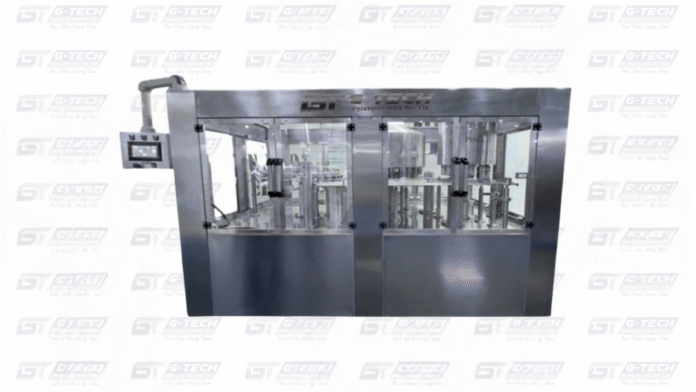
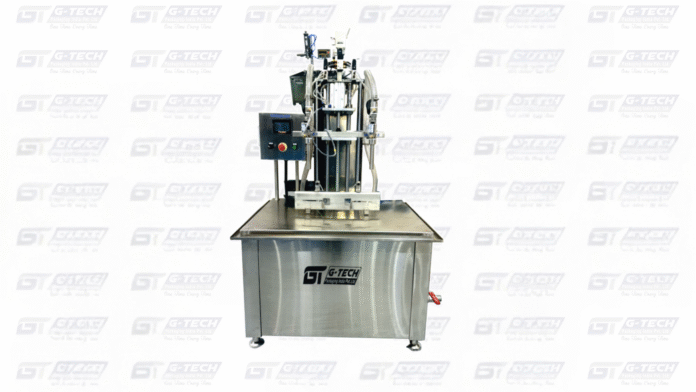
India’s edible oil industry is growing fast, and so are consumer expectations. Buyers today want oil that arrives sealed, hygienic, accurately measured, and beautifully labeled — every single bottle, jar, or pouch, every single time. For manufacturers, that means one thing: the packaging line can no longer be an afterthought. It has to be as precise as the refining process itself.
At G-Tech Packaging India Pvt. Ltd., we’ve spent over a decade engineering liquid filling, capping, sealing, and labeling machines built specifically for the challenges edible oil producers face. Here’s why automation matters, and what to look for when upgrading your line.
The Unique Challenges of Edible Oil Packaging
Edible oil isn’t like water or juice. It behaves differently on a filling line, and it comes with its own set of risks:
- Viscosity variation: Mustard oil, groundnut oil, sunflower oil, and cold-pressed oils all flow differently, especially across seasonal temperature swings. A machine calibrated for one may underfill or overfill another.
- Purity and hygiene: Any contact with dust, moisture, or manual handling risks contaminating the product and shortening shelf life.
- Fill accuracy: Even a small, consistent overfill across thousands of units adds up to significant product giveaway — a direct hit to margins.
- Container diversity: PET bottles, tins, pouches, and jars all need different filling, capping, and sealing approaches.
- Leak-proof sealing: A single leaking cap during transit can damage packaging, shelves, and brand reputation.
Why Automation Is No Longer Optional
Edible oil manufacturers who still rely on manual or semi-automatic filling often face slower output, inconsistent fill levels, higher labor dependency, and more product wastage. Automated systems solve these problems directly by combining precision filling, secure capping, and consistent labeling into one continuous, hygienic process — with far less human contact with the product.
The result: higher throughput, lower giveaway, fewer rejections, and a consistently professional look on shelf.
The Right Machines for an Edible Oil Line
A well-designed edible oil packaging line typically brings together:
Volumetric or Weighmetric Oil Filling Machines — Volumetric fillers measure by volume and are ideal for consistent-viscosity oils at high speed, while weighmetric fillers measure by weight, delivering superior accuracy for oils where density can vary batch to batch.
Automatic Servo Filling Machines — Servo-driven systems allow precise, programmable fill volumes with minimal drip and spillage, making them ideal for brands running multiple SKUs on the same line.
Automatic Screw Capping or Press-on Cap Machines — Consistent torque control ensures every cap is sealed tight enough to prevent leakage, without cracking the container.
Induction Sealing Machince — For tamper-evidence and shelf-life protection, induction sealing creates an airtight barrier under the cap, keeping oil fresh and contamination-free.
Sticker Labeling Machines — Front-and-back or round labeling systems apply labels accurately at high speed, ensuring your branding always looks shelf-ready.
Shrink Tunnels and Box Sealing Machines — For secondary packaging, shrink wrapping and carton sealing protect bottles during transit and give a polished final presentation.
What to Consider Before You Automate
If you’re evaluating a packaging upgrade, think through:
- Your bottle/container range — Will the machine handle multiple sizes and shapes without extensive changeover time?
- Production targets — Semi-automatic lines suit smaller batch producers, while fully automatic, PLC-based lines suit high-volume operations.
- Hygiene requirements — Stainless steel contact parts and enclosed filling reduce contamination risk.
- After-sales support — Downtime on a filling line is costly, so responsive service and easy maintenance matter as much as the machine itself.
- Customization — Every oil brand’s bottle, cap, and label combination is different; look for a manufacturer willing to tailor the line to your product.
The G-Tech Advantage
Since 2014, G-Tech Packaging has delivered over 1,550 domestic installations and 200+ exports across 19 countries, helping edible oil brands move from manual operations to fully automatic, PLC-based production lines. Our ISO-certified machines are engineered for the realities of Indian edible oil manufacturing — variable viscosity, high-volume runs, and the need for spotless hygiene — while remaining flexible enough to adapt as your product range grows.
Whether you’re a growing regional brand or an established exporter, the right filling, capping, sealing, and labeling setup can transform your production speed, cut wastage, and protect your brand’s reputation bottle after bottle.
Ready to upgrade your edible oil packaging line? Get in touch with G-Tech Packaging for a customized solution built around your product and your production goals.
📞 +91 95580 19425 | 📧 sales@gtechpackaging.in | 🌐 gtechpackaging.in