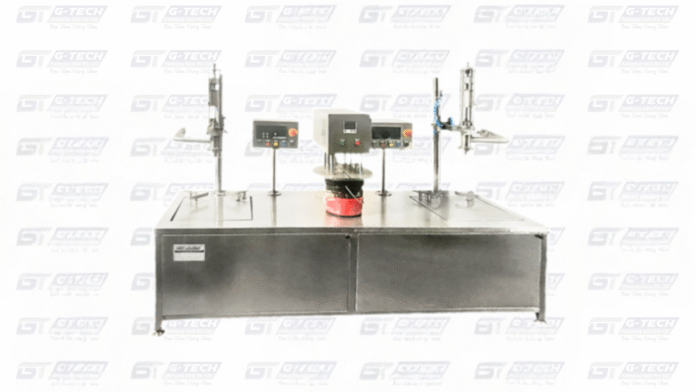
A box sealing machine, also called a carton sealer or taping machine, closes and tapes corrugated cartons at the end of a packaging line. For an edible oil, lubricant, pesticide or pharma plant, it is the last step before goods go to the warehouse and then to dealers. A badly sealed carton can open in transit, damage bottles inside and lead to complaints and returns.
The good news is that most box sealing machine problems have simple causes. This guide covers how the machine works, the faults operators see most often and what to check before you call a technician.
How a Box Sealing Machine Works
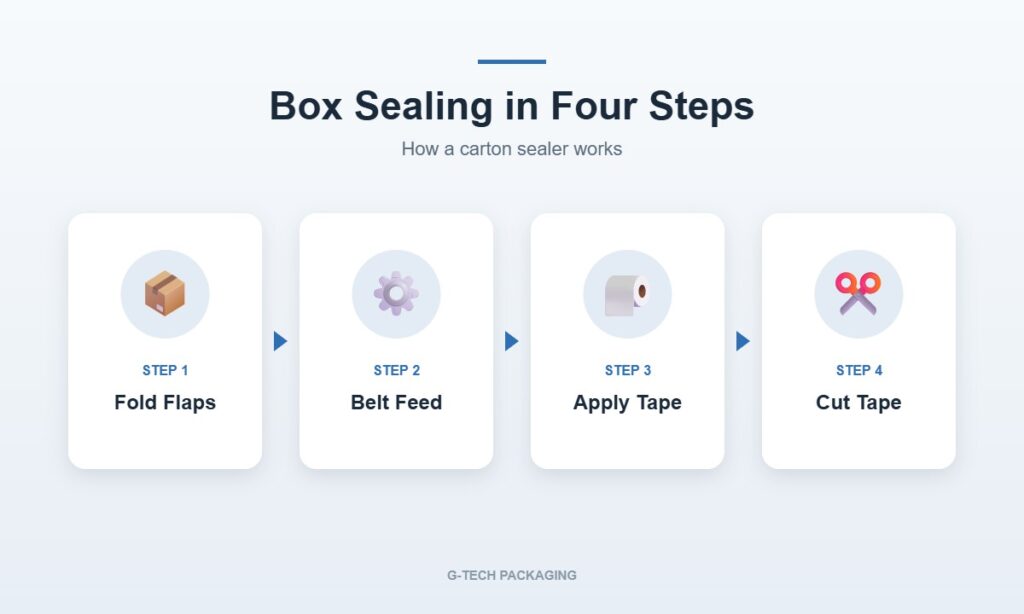
A typical automatic box sealing machine has side belts that grip and pull the carton through, a top tape head and a bottom tape head. As the carton moves forward, the front edge pushes against a roller that starts the tape. The tape is pressed along the flap joint, and a spring-loaded knife cuts it once the carton passes. The top head is set to the carton height, and the side belts are set to the carton width.
Because the carton itself operates the tape heads, carton size, flap condition and tape quality matter as much as the machine settings.
Common Box Sealing Machine Problems and Fixes
| Problem | Likely cause | What to check or fix |
|---|---|---|
| Tape not cutting | Blunt or dirty knife, weak knife spring | Clean adhesive off the blade, replace a blunt blade, check spring tension |
| Tape not sticking to the carton | Dusty or low-quality tape, wrong tape width, low pressure roller force | Use good-quality tape of the right width, check roller springs |
| Short or uneven tape legs | Tape tension wrong, front roller not starting tape cleanly | Adjust tape tension, check that the tape threading follows the diagram |
| Carton jams or stops | Belts set too tight or too loose, overfilled cartons | Reset width and height, make sure flaps close flat |
| Wrinkled tape seal | Too much tape tension, worn rollers | Reduce tension, inspect and replace worn rollers |
| Flaps not closing properly | Bulging carton, flap folder not adjusted | Check carton fill level and flap folder position |
Tape not cutting cleanly
This is the most common complaint. Adhesive builds up on the knife over time and the blade gets blunt. With power off and guards in place as per the manual, clean the blade with a suitable cleaner, and replace it if cleaning does not help. A weak knife spring can also stop the blade from snapping through the tape.
Tape not sticking or lifting after sealing
Low-grade tape, dusty carton surfaces and cold storage areas can all reduce stickiness. Store tape rolls in a clean, dry place and use the tape width the machine is set for. The pressure rollers must press the tape firmly onto the flaps, so check their springs.
Cartons jamming or slipping
If the side belts are too tight, the carton crushes and jams. If they are too loose, the carton slips and the tape leg becomes uneven. Reset the width and height every time you change carton size, and do not run cartons where bottles push the flaps up.
Preventive Maintenance Routine
- Clean tape adhesive from knives, rollers and guides at the end of each shift.
- Check side belts for wear, cracks and correct tension weekly.
- Inspect knife blades and springs and keep spare blades in stock.
- Keep the tape threading diagram near the machine for operators.
- Check that safety guards and emergency stop work before each shift.
- Follow the lubrication points and intervals given in the machine manual.
Carton Quality Matters Too
Many faults blamed on the machine start with the carton. Cartons that are out of square, have weak flaps or are overfilled will not seal neatly however good the machine is. Agree carton dimensions and board grade with your carton supplier, and check incoming lots. When bottles and cartons are matched correctly, the box sealer runs smoothly and the seal looks professional.
Matching the Sealer to the Rest of the Line
The box sealer should keep pace with the machines before it. If your line also uses a shrink tunnel for bundles, plan conveyor space so cartons and bundles do not pile up. Plants packing many carton sizes should look at how quickly the sealer can be reset between sizes. For an overview of the machine itself, see our post on the G-Tech box sealing machine.
For edible oil and lubricant plants in particular, cartons are heavy and must stay closed through long transport routes. A firm, even tape seal on both top and bottom flaps protects your bottles and your brand.
Frequently Asked Questions
Why is my carton sealer not cutting the tape?
The knife is usually dirty with adhesive or blunt, or the knife spring is weak. Clean or replace the blade and check the spring tension.
What tape should I use in a box sealing machine?
Use good-quality packing tape in the width your tape heads are set for. Ask your machine supplier or the manual for the recommended width and core size.
Can one box sealing machine handle different carton sizes?
Yes, most machines can be adjusted for a range of carton widths and heights. Reset the side belts and top head each time the carton size changes.
Talk to G-Tech Packaging India
G-Tech Packaging India Pvt. Ltd., Ahmedabad, designs and builds automatic filling, capping, induction sealing, labeling, leak testing, shrink tunnel and box sealing machines for Indian manufacturers. If you want a reliable carton sealing setup for your line, or help with an existing machine, we are happy to assist. Contact our team or email sales@gtechpackaging.in with your product, pack sizes and target output, and we will suggest a practical solution.