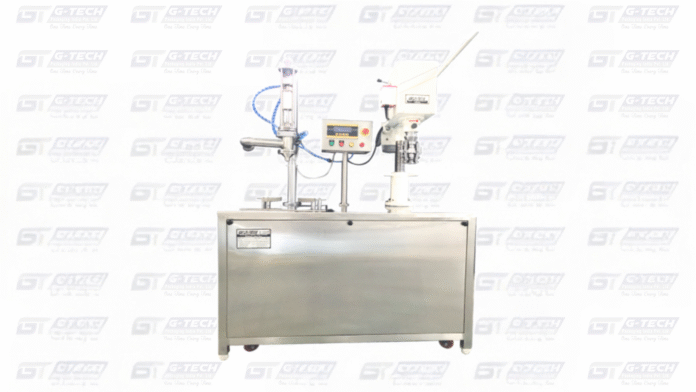
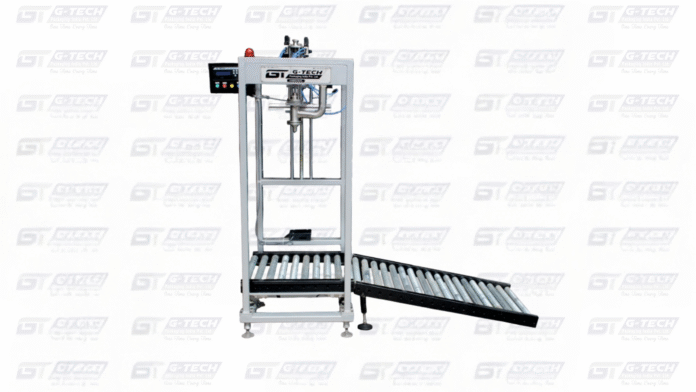
Buying a filling, capping or labeling machine is a big investment, and the worst time to discover a problem is after the machine has been shipped, installed and connected to your line. A factory acceptance test for packaging machine purchases, usually called a FAT, lets you check the machine at the maker’s works before dispatch, using your own containers and product wherever possible.
This guide explains what a FAT is, why it matters, what to check at each stage, and how to prepare so the visit is productive for both you and your machine supplier.
What Is a Factory Acceptance Test?
A factory acceptance test is a structured inspection and trial run of a machine at the manufacturer’s facility, carried out before the machine is packed and sent to the buyer. The buyer or their representative checks that the machine is built as agreed and performs as expected. Problems found at this stage are much easier and cheaper to fix than problems found at the buyer’s plant.
A FAT is often followed by a site acceptance test after installation, which confirms the machine works on the actual production line.
Why a FAT Is Worth Doing
- You see the machine running before it leaves the factory.
- Changes can be made while the maker’s team and parts are close at hand.
- Your operators and engineers get early familiarity with the machine.
- It reduces surprises during installation and commissioning.
- Both sides have a clear, written record of what was agreed and tested.
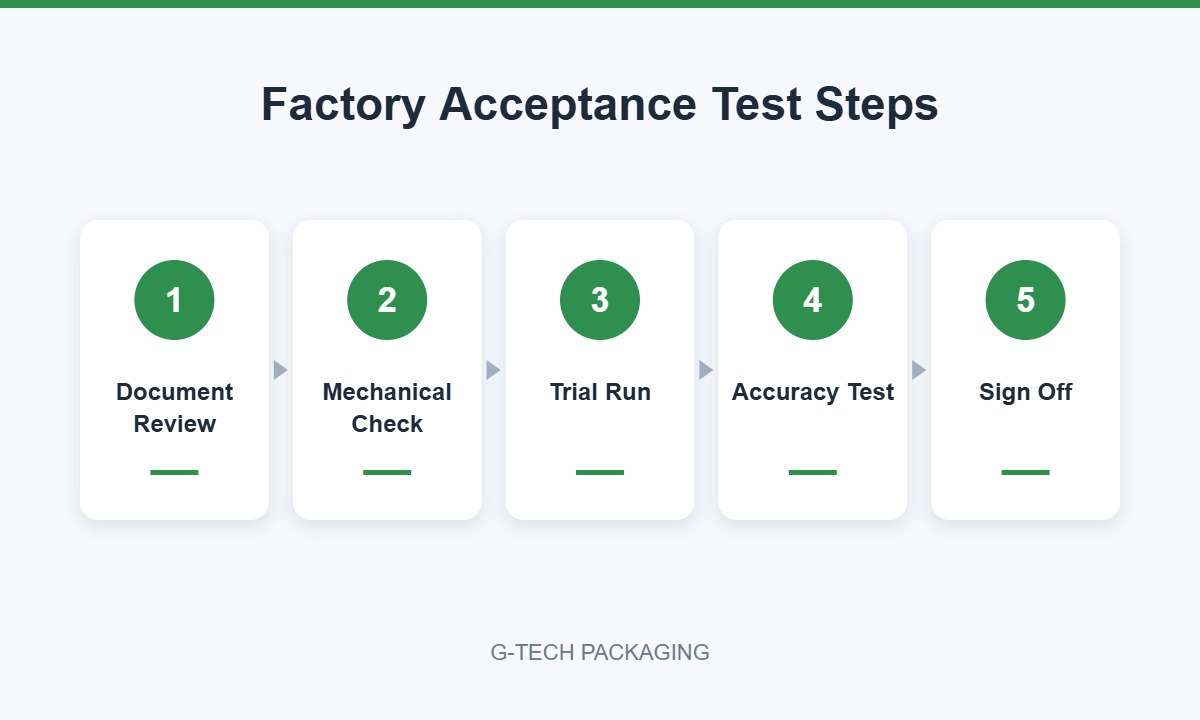
The Five Main Steps of a FAT
1. Document review
Compare the machine against the purchase order and agreed specifications: model, number of heads, container range, materials of contact parts, electrical supply and included accessories. Check that manuals, electrical drawings and a spare parts list are available.
2. Mechanical and safety check
Inspect build quality, welds and finish, guards and interlocks, emergency stops, and access for cleaning and maintenance. Confirm the machine matches your plant’s conveyor height and layout plan.
3. Trial run
Run the machine with your containers, caps and labels. Watch transfer between stations, container stability on the conveyor and how the machine handles the range of sizes you ordered.
4. Performance and accuracy test
Check fill quantity on a sample of containers, cap tightness, seal quality and label placement. For complete lines, include downstream machines such as a leak testing machine, shrink tunnel or box sealing machine. Agree in advance how many containers will be tested and what results count as acceptable.
5. Sign-off and punch list
Record any points that need correction in a punch list, with responsibility and target dates. Sign off once the agreed criteria are met, or agree a follow-up check for open points.
FAT Checklist at a Glance
| Area | What to check | Who confirms |
|---|---|---|
| Specifications | Model, heads, materials, power supply | Buyer and supplier |
| Safety | Guards, interlocks, emergency stops | Buyer engineer |
| Changeover | Time and steps for each container size | Operator or supervisor |
| Accuracy | Fill quantity, capping, sealing, labeling | Quality team |
| Documents | Manuals, drawings, spares list | Buyer and supplier |
How to Prepare for a FAT
- Send enough sample containers, caps, labels and, where possible, product to the supplier well before the test date.
- Agree acceptance criteria in writing beforehand, including how many containers will be checked.
- Bring the people who will run and maintain the machine, not only purchase staff.
- Carry your line layout drawing to confirm heights, direction of flow and connections.
- Plan enough time; rushing a FAT defeats its purpose.
Fill accuracy checks during a FAT follow the same principles as routine checks on your line. Our guide on filling machine calibration explains how to check and adjust fill quantity properly.
FAT for Different Industries
Dairy and food and beverage buyers should pay extra attention to hygiene, product contact materials and ease of cleaning. Edible oil and lubricant buyers often focus on fill accuracy across temperature changes. Pesticide and chemical buyers should check material compatibility and safe handling features.
Common FAT Mistakes to Avoid
- Testing only one container size when you ordered a range of sizes.
- Accepting a short demo run instead of a test long enough to show consistency.
- Not writing down acceptance criteria before the visit, which leads to disagreements later.
- Sending too few sample containers, caps or labels, so the test cannot be completed properly.
- Leaving the operators and maintenance staff out of the visit, so they meet the machine for the first time at installation.
Avoiding these mistakes keeps the FAT focused and gives you a machine that is ready for production soon after it reaches your plant.
Frequently Asked Questions
Is a factory acceptance test necessary for small machines?
For a single standard machine, a video trial or a short visit may be enough. For complete lines or customised machines, a proper FAT is strongly recommended.
What is the difference between FAT and SAT?
A FAT happens at the manufacturer’s facility before dispatch. A site acceptance test (SAT) happens at the buyer’s plant after installation, with the machine connected to the real line.
Should I use my own product during the FAT?
Whenever practical, yes. Your actual product and containers show how the machine will behave in real production far better than substitutes.
Talk to G-Tech Packaging India About Your Line
G-Tech Packaging India Pvt. Ltd., Ahmedabad, designs and builds automatic liquid filling, capping, induction sealing, labeling, leak testing, shrink tunnel and box sealing machines for Indian manufacturers. If you are planning a new packaging machine or line and would like to plan a factory acceptance test, share your container sizes, product details and target output with our team and we will suggest a practical setup. Contact us here or email sales@gtechpackaging.in.