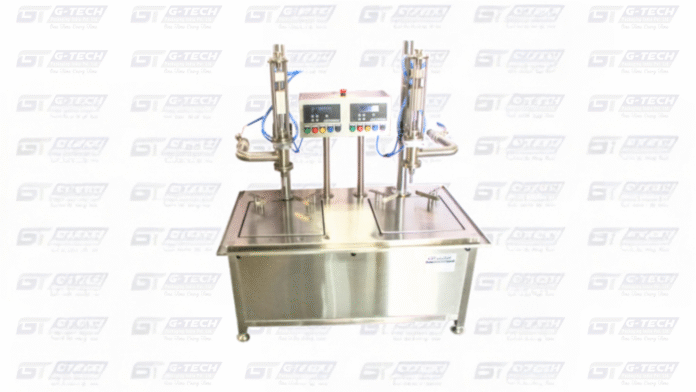
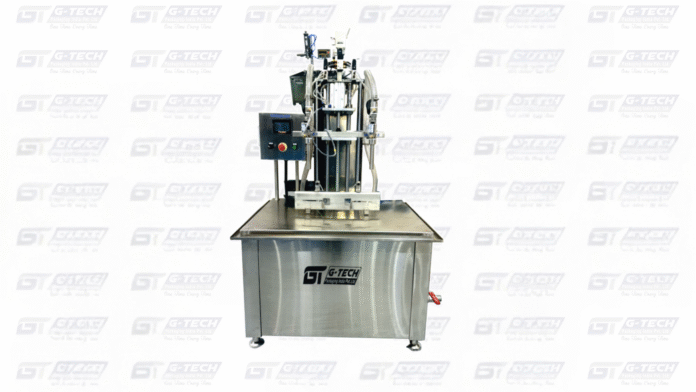
Jerry cans are everywhere in Indian industry. Edible oil brands sell 5 litre family packs, lubricant makers ship engine and gear oils in 3.5, 5 and 7.5 litre cans, and agro-chemical companies pack liquid formulations in rugged HDPE containers. As volumes grow, filling these cans by hand or with a basic semi-automatic setup becomes slow, messy and hard to keep accurate.
A dedicated jerry can filling machine solves this, but larger containers bring their own engineering challenges. This guide explains what makes jerry can filling different and what to look for when you choose a machine.
Why Jerry Cans Need a Different Approach
Filling a 5 litre can is not just filling a 1 litre bottle five times over. The differences affect almost every part of the machine:
- Longer fill time per container, so the head count and fill method decide line output
- Heavier containers that need sturdy conveyors, guides and stoppers
- Off-centre necks and handles on many can designs, which affect nozzle alignment and capping
- Splashing and foaming risk when large volumes enter the can quickly
- Higher value per pack, so overfilling costs more money on every container
Volumetric or Weighmetric Filling?
The two main filling principles for jerry cans are volumetric (measuring volume) and weighmetric (measuring weight on load cells under each can). Both are widely used; the right choice depends on your product and how you declare quantity.
| Point | Volumetric | Weighmetric |
|---|---|---|
| Principle | Fills a set volume using pistons, pumps or flow measurement | Fills until a set weight is reached on a load cell |
| Typical use | Free-flowing oils and liquids of stable density | Larger packs, and products where weight is declared or density varies |
| Affected by temperature | Volume can shift as liquid density changes | Weight reading is not affected by density changes |
| Container size range | Very wide | Well suited to larger containers like cans and pails |
G-Tech builds both volumetric oil filling machines and weighmetric oil filling machines, and the choice is best made after looking at your products, pack sizes and declaration method together.

Key Features to Look For
Diving or Bottom-Up Nozzles
For large volumes, nozzles that dive into the can and rise as the level climbs reduce splashing and foam. Anti-drip shut-off at the nozzle keeps the can neck and conveyor clean, which matters for oily and chemical products.
Coarse and Fine Fill Stages
Many can fillers fill quickly at first and then slow down near the target. This two-stage approach balances speed with accuracy and helps cut product giveaway.
Strong Can Handling
Look for a robust conveyor, adjustable side guides and a reliable can positioning system so each neck sits correctly under its nozzle. Off-centre necks need careful positioning.
Contact Material Suited to Your Product
Edible oils, lubricants and agro-chemicals each have different needs for contact parts and seals. Corrosive formulations may need specific materials; confirm compatibility with your supplier using your product data.
Completing the Jerry Can Line
Filling is only the first step. A typical automatic jerry can line also includes:
- Capping, with a capping machine able to handle the larger cap and the can’s neck position
- Induction sealing, using an online induction sealing machine sized for the cap diameter, to give a tamper-evident, leak-resistant seal
- Leak testing, to catch cracked cans or poor seals before dispatch
- Labeling and batch coding on the flat panel of the can
- Carton packing or shrink wrapping, followed by box sealing
If you also handle bigger 15 litre tins, our article on handling bulk 15 litre edible oil tins covers that range.
Industries That Use Jerry Can Filling Machines
- Edible oil and lubricant oil producers packing 1 to 10 litre cans
- Pesticide and agro-chemical companies filling liquid formulations
- Chemical manufacturers packing cleaning chemicals, solvents and industrial liquids
Questions to Ask Before You Buy
A short checklist helps you compare offers on equal terms and avoid surprises after installation:
- Which can sizes, neck positions and cap types can the machine handle, and what change parts are needed?
- Which filling principle is proposed for my product, and why?
- How is splashing and foaming controlled for large volumes?
- What output can I expect for each can size with my product?
- How easy is cleaning and product changeover between batches?
- What spares should I keep, and how is service support provided?
- Can capping, sealing, leak testing and labeling be added to the same line later?
Clear answers to these questions, ideally backed by a trial with your own product and cans, give you a much better basis for a decision than a speed figure alone.
Frequently Asked Questions
Can one machine fill both 1 litre bottles and 5 litre jerry cans?
Often yes, with adjustable guides, change parts and suitable nozzles, as long as both sizes fall within the machine’s range. Output and changeover time will differ between sizes, so discuss your full pack range with the supplier.
How many filling heads do I need for jerry cans?
It depends on your required daily output, fill volume and product flow. Work out the cans per minute you need and let your supplier match the head count and fill method to it.
Is weighmetric filling more accurate for cans?
Weighmetric filling measures weight directly, so it is not affected by density changes with temperature. Volumetric machines can also be very accurate for stable liquids. The best choice depends on your product and how quantity is declared on the pack.
Talk to G-Tech Packaging About Your Line
G-Tech Packaging India Pvt. Ltd., Ahmedabad, designs and builds automatic filling, capping, induction sealing, labeling, leak testing, shrink tunnel and box sealing machines for Indian manufacturers. If you are planning a jerry can filling line for oil, lubricant or agro-chemical packs, share your container sizes, product details and target output with our team and we will suggest a practical machine configuration. Contact us here or write to sales@gtechpackaging.in.