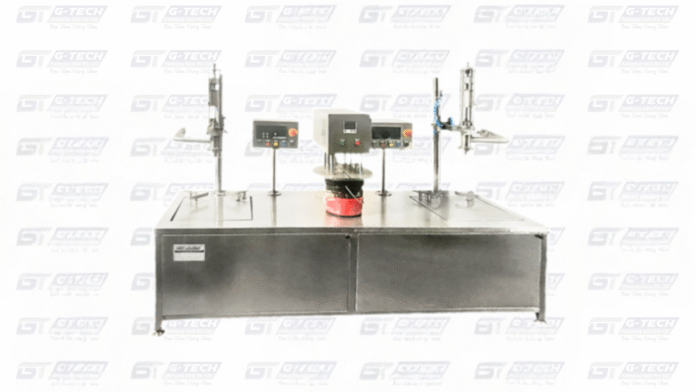
Some liquids are easy to fill. Others start foaming the moment they hit the bottom of the bottle. Foam rises faster than the liquid, spills over the neck, makes the outside of the container sticky and leaves fills short once it settles. If your line handles surfactant-based products, certain chemicals or liquids that trap air easily, a foaming liquid filling machine set up for the job makes a clear difference.
This guide explains why foaming happens and the machine features that control it.
Why Liquids Foam During Filling
Foam forms when air gets mixed into a liquid and is held there by the product chemistry. Surfactants, proteins and some additives stabilise those bubbles. On a filling line, three things usually introduce the air:
- Free fall: liquid dropping from a nozzle at the neck splashes and pulls air in.
- Turbulence: high flow speed churns the liquid already in the container.
- Air in the system: leaks in pipes, pump suction or a low supply tank can draw air into the product before it reaches the nozzle.
Fixing foam is therefore about controlling how the liquid enters the container and keeping air out of the supply.
Bottom-Up (Diving Nozzle) Filling
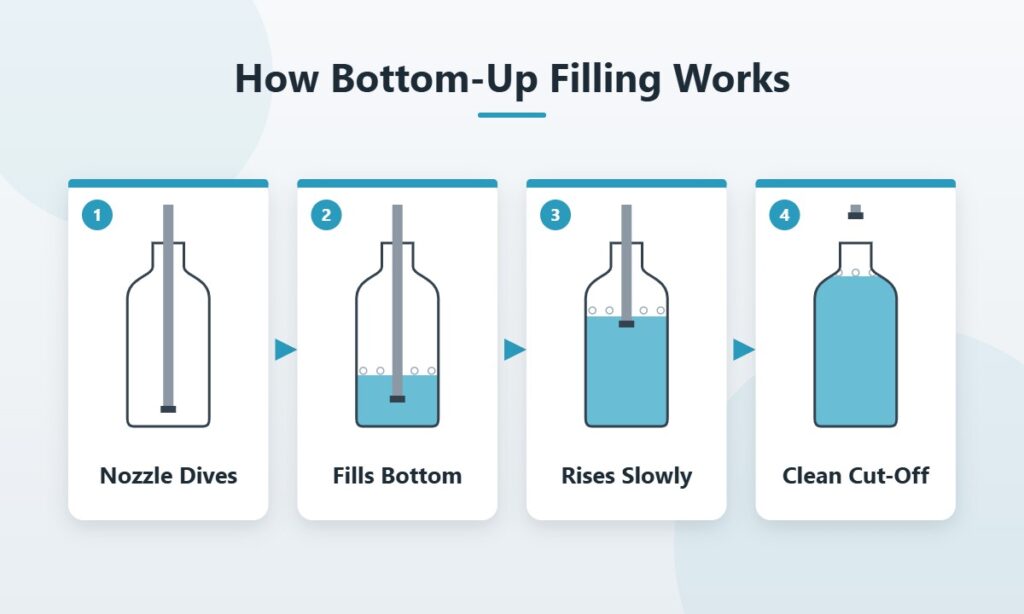
The most effective tool against foam is bottom-up filling, also called diving nozzle filling. The nozzle moves down into the container until its tip is close to the bottom. Filling starts there, so the liquid enters below its own surface instead of falling and splashing. As the level rises, the nozzle rises with it, staying just below or at the surface. At the end of the cycle the nozzle cuts off cleanly and withdraws.
Because there is no free fall, very little air is mixed in. Dive depth and rise speed are usually adjustable, so the same machine can be tuned for different products and container heights.
Other Features That Help Control Foam
| Feature | How it helps |
|---|---|
| Diving (bottom-up) nozzles | Fill below the liquid surface, avoiding splash |
| Two-speed filling | Slow start and slow finish, faster flow in the middle |
| Anti-drip or shut-off nozzles | Clean cut-off with no drips on the neck |
| Volumetric or weight-based filling | Accurate quantity even when foam makes the level misleading |
| Sealed product path | Prevents air being drawn into pumps and pipes |
| Adjustable conveyor timing | Gives foam a moment to settle before capping |
Practical Setup Tips for Operators
- Start with a lower flow rate and increase it only while the foam stays under control.
- Set the dive depth so the nozzle tip is near, but not touching, the container base.
- Match the nozzle rise speed to the rate the level rises; rising too fast brings back splash.
- Check pump suction and pipe joints for air leaks if foam appears suddenly.
- Keep the supply tank at a steady level so the pump does not draw air.
- Allow a short settling gap before the capping station if the product needs it.
Which Products Need This Approach?
Bottom-up filling is widely used in personal care and household chemical plants, where surfactant-rich liquids foam heavily. It is also helpful for some agro-chemical formulations and any liquid that traps air easily. G-Tech can configure liquid filling machines with diving nozzles and suitable controls, and match them with capping machines downstream.
Foamy products are only one difficult category. For thick products, read our article on handling viscous liquids on a packaging line.
Choosing Nozzles and Containers for Foamy Products
The nozzle must fit comfortably inside the container neck with room for displaced air to escape as the liquid rises. A nozzle that nearly fills the neck traps air and pushes foam out. Narrow-neck bottles therefore need slimmer nozzles, and the dive stroke must be long enough to reach close to the base of the tallest container you run.
Container shape also matters. Bottles with a sharp shoulder or a very narrow neck give foam less room to settle, so they usually need slower final filling. Wide-mouth jars are more forgiving.
Cleaning and Maintenance
Foaming products often contain surfactants and other ingredients that leave residue. Dried product on nozzle tips disturbs the flow and can cause drips and splashing, which brings foam back. Clean nozzles and the product path at the end of each run, check nozzle seals and shut-off valves regularly, and inspect the dive mechanism so the nozzles move smoothly. A clean, well-maintained machine keeps foam under control far more consistently than constant setting changes.
Frequently Asked Questions
What is a diving nozzle filling machine?
It is a filler whose nozzles move down into the container and fill from the bottom upward, rising with the liquid level. This avoids splashing and reduces foam.
Can I reduce foam without changing my machine?
Sometimes. Lowering flow speed, fixing air leaks and keeping the supply tank level steady can help, but heavily foaming products usually need bottom-up nozzles.
Is weight or volume better for foaming liquids?
Both work well because they measure quantity directly. Level-based filling can be misleading with foam, since the foam layer makes the container look fuller than it is.
Talk to G-Tech Packaging India
Struggling with foam and overflow on your line? G-Tech Packaging India Pvt. Ltd., Ahmedabad, designs and builds liquid filling, capping, induction sealing, labeling, leak testing, shrink tunnel and box sealing machines for Indian manufacturers. Share your container, product and output target with our team through the Contact Us page or email sales@gtechpackaging.in, and we will suggest a practical machine setup for your line.