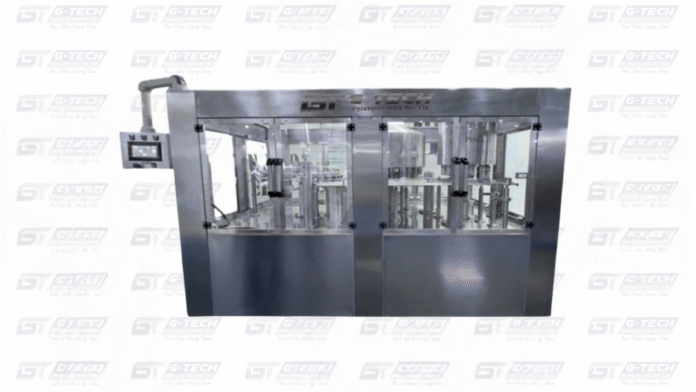

Buying good machines is only half of building a productive packaging line. Where you place them matters just as much. A poor layout means operators walk too far, bottles pile up at bends, cartons block passages and the line never reaches the speed you paid for. A good layout makes the same machines run smoother with fewer people.
Whether you are setting up a new edible oil plant, shifting to a bigger shed or adding automation to an existing unit, this guide walks you through planning a practical bottle filling line layout.
Start With the Flow of Material
Think of your line as a river: empty bottles flow in at one end and sealed cartons flow out at the other. Everything should move in one direction without crossing back. A typical sequence looks like this:
- Empty bottle feeding (manual table, turntable or unscrambler)
- Liquid filling machine
- Capping machine
- Induction sealing
- Labeling and batch coding
- Leak testing, where required
- Shrink sleeve or shrink wrapping
- Carton packing and box sealing
- Finished goods area
Also map the supply side: where bulk product arrives from storage tanks, where empty bottles and caps are stored, and where finished cartons go for dispatch. Keep raw material and finished goods paths separate so forklifts and trolleys do not cross the line.
Straight Line or L-Shape?
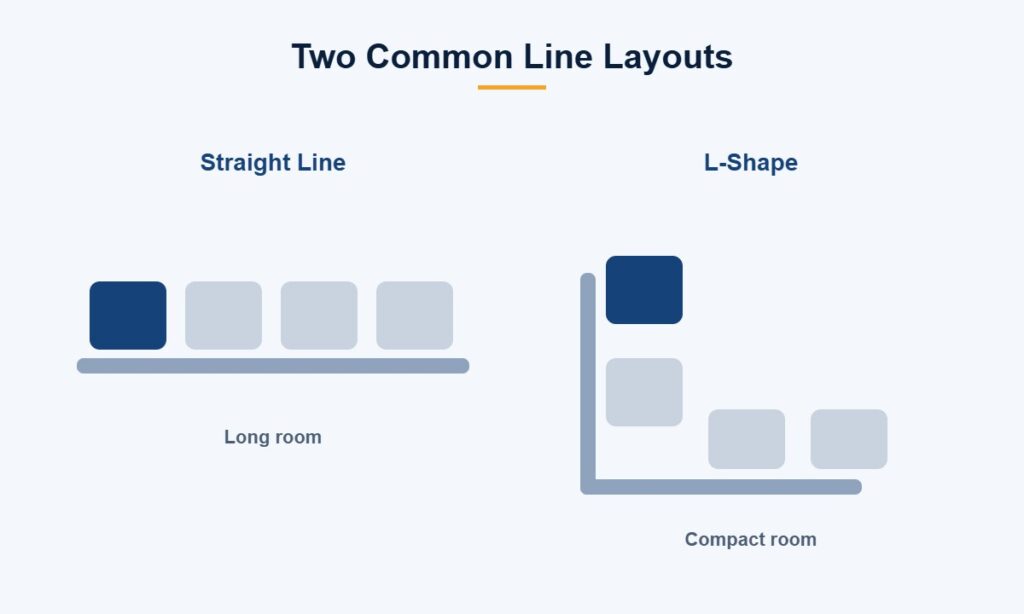
The shape of your room usually decides the shape of your line. Both layouts work well when planned correctly.
| Layout | Best for | Things to consider |
|---|---|---|
| Straight line | Long, narrow sheds | Simple flow, easy supervision; needs enough room length |
| L-shape | Square or compact rooms | Saves length; bends need smooth conveyor transfer |
| U-shape | Small teams, compact space | Start and end close together; one operator can watch both ends |
Bends are where problems hide. Bottles can tip or jam at a sharp curve, especially tall or light containers. Use proper curved conveyors with guide rails rather than abrupt 90-degree transfers, and keep machines that need frequent attention away from corners.
Spacing and Accessibility
Machines placed too close together are hard to clean, adjust and repair. When planning spacing, think about the people who will work on the line every day.
- Leave walking space on both sides of the line for operators and maintenance.
- Keep space around each machine for opening guards and changing parts.
- Place control panels where operators can see them without leaning over moving parts.
- Provide a short buffer conveyor between machines so a brief stop on one does not halt the whole line.
- Plan electrical, compressed air and drainage points before machines arrive.
- Keep a clear area near the filler for bulk product hoses or tank connections.
Match Machine Speeds
A line runs only as fast as its slowest machine. If your filler can do more bottles per minute than your labeler, bottles will queue and the filler will stop and start. When you plan the layout, list the realistic output of each machine and make sure they are balanced, with the filler set slightly below the downstream machines so bottles flow without crowding. Our guide on reducing downtime in your bottling line covers this in more detail.
Plan for Hygiene and Industry Needs
Different industries need different layouts. Edible oil and ghee lines need easy cleaning and oil-resistant flooring. Dairy and food lines benefit from separating the filling zone from the packing zone. Pesticide and chemical units need ventilation, spill containment and safe storage. Discuss these needs with your machine supplier early so the layout supports them.
Leave Room to Grow
Most growing businesses add a second filler head, a new labeler or a shrink tunnel within a few years. If your layout is already tight, every upgrade means rebuilding the line. Leave space at the end of the line for future additions, and choose conveyors that can be extended. A little extra space today is much cheaper than relocating machines later.
Frequently Asked Questions
How much space does a bottle filling line need?
It depends on the number of machines, container size and output. Share your room dimensions and product details with your supplier for a layout drawing based on your actual plant.
Can I fit a complete line in a small room?
Often yes. An L-shape or U-shape layout, compact monoblock machines and careful spacing can fit a full line into limited space.
Should I plan the layout before ordering machines?
Yes. Planning first avoids buying machines that do not fit, and helps you place power, air and drainage points correctly.
Talk to G-Tech Packaging India, Ahmedabad
Setting up a new plant or reorganising an existing one? G-Tech Packaging India, Ahmedabad can help you plan a bottle filling line layout that fits your space and output. Share your product, container sizes and target output with our team, and we will suggest a practical machine set-up for your plant. Contact G-Tech Packaging India or email us at sales@gtechpackaging.in.