
Edible oil sits on grocery shelves as a trusted household staple, which means every bottle, pouch, or tin that leaves a production line carries an implicit promise: it’s clean, it’s exactly what the label says, and it’s safe to cook with. That promise is built — or broken — on the filling line. Here’s why hygiene and accuracy deserve to be treated as core design requirements, not afterthoughts.
The Real Cost of Inaccurate Filling
Underfilling even by a small margin across thousands of units can trigger regulatory penalties under legal metrology rules, damage consumer trust, and open the door to costly disputes with distributors. Overfilling, on the other hand, quietly eats into margins — oil given away for free adds up fast at scale. Precision filling technology, whether volumetric or weighmetric, exists to close this gap and keep every unit consistent, batch after batch, shift after shift.
This is especially important for manufacturers exporting to international markets, where fill-weight compliance is often audited more strictly and inconsistency can jeopardize entire contracts.
Why Hygiene Can’t Be an Afterthought
Edible oil is a food product, and any filling line handling it needs to be built with that reality front and center. A few things matter here:
Contact parts matter. Every component that touches the oil — nozzles, pistons, tanks, pipework — should be food-grade stainless steel that resists corrosion and doesn’t leach into the product over repeated use.
Cleanability isn’t optional. Machines with hard-to-reach crevices or components that are difficult to disassemble make thorough cleaning a chore, which means it’s more likely to get skipped or rushed. Look for designs that support quick, thorough cleaning between batches or product changes.
Sealed, enclosed filling reduces contamination risk. Open filling processes expose oil to dust, moisture, and airborne contaminants for longer than necessary. Enclosed filling heads and minimal manual handling reduce that exposure window significantly.
Consistency reduces human error. The more a filling process depends on manual judgment — eyeballing fill levels, manually starting and stopping flow — the more room there is for both contamination and inaccuracy to creep in. Automated systems remove much of that variability.
How Technology Is Closing the Gap
Modern edible oil filling machines increasingly combine hygiene and accuracy into a single, engineered system rather than treating them as separate concerns:
- No-bottle-no-fill sensors stop oil from being dispensed into open air, preventing both waste and contamination of the machine itself.
- Anti-drip nozzles prevent oil residue from building up around fill points, which would otherwise become a magnet for dust and microbial growth.
- PLC-HMI controlled systems allow fill volumes to be programmed precisely and monitored in real time, catching deviations before they become a batch-wide problem.
- Servo-driven filling heads deliver a level of repeatability that manual or pneumatic systems can’t consistently match, especially at higher speeds.
What This Means for Manufacturers
If you’re running or scaling an edible oil packaging operation, hygiene and accuracy shouldn’t be treated as two separate checkboxes — they’re deeply connected. A machine designed with proper hygienic construction naturally supports more consistent, accurate filling, and vice versa. When you’re evaluating equipment, ask pointed questions about contact-part materials, cleaning procedures, and how fill accuracy is measured and maintained over long production runs.
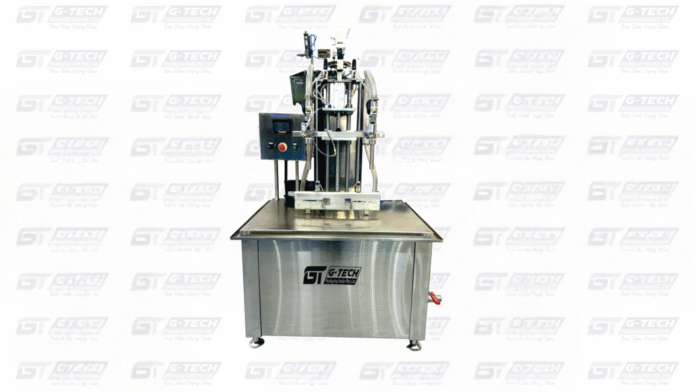
At G-Tech Packaging, our edible oil filling machines are engineered around this exact principle — precision-driven, hygienically built, and designed to hold up to the demands of continuous production. With over a decade of experience serving edible oil manufacturers across India and 19+ countries, we understand what it takes to keep both compliance and consumer trust intact, one fill at a time.