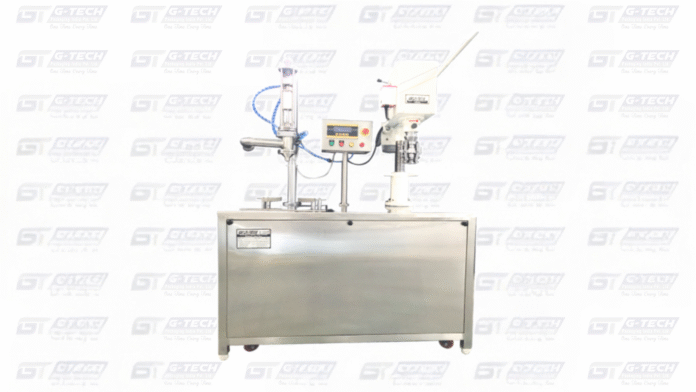
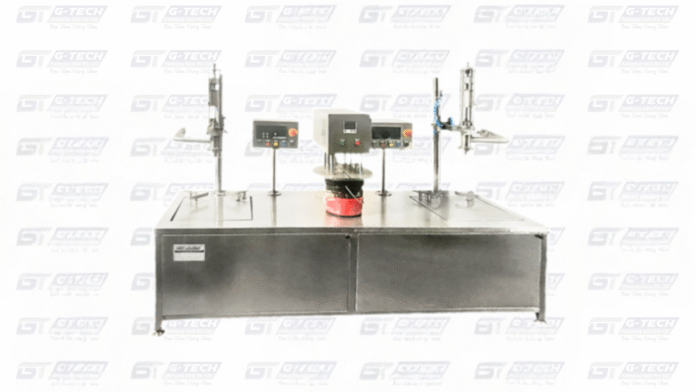
Round bottles are the most common containers in Indian liquid packaging, from pharma syrup bottles and hair care bottles to small lubricant and pesticide bottles. For all of them, a wrap around labeling machine is usually the most practical way to apply a neat, straight label at production speed. Instead of an operator rolling each label by hand, the machine feeds, spaces and wraps a self-adhesive label around the full circumference or part of the bottle.
This guide explains how a wrap-around labeler works, which containers it suits, what to check when buying one, and how to keep labels straight and bubble-free shift after shift.
What Is a Wrap Around Labeling Machine?
A wrap-around labeling machine is a type of sticker labeling machine built for cylindrical containers. A roll of pressure-sensitive labels is mounted on the machine. As each bottle passes, a sensor detects it, the label is peeled from its liner and stuck to the bottle, and the bottle is rolled against a pressing belt or roller so the label wraps smoothly around it.
It can apply a full wrap label that overlaps at the joint, or a partial wrap that covers only part of the bottle, depending on the label design.
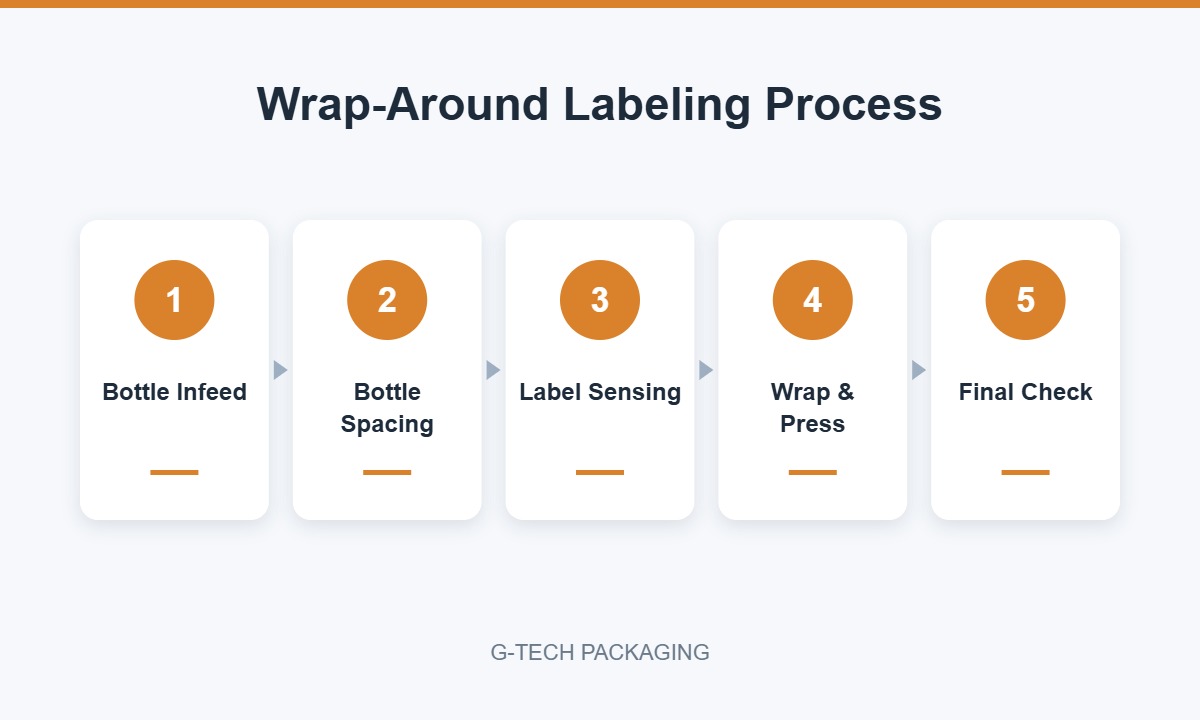
How the Wrap-Around Labeling Process Works
- Bottle infeed: bottles arrive on the conveyor, usually from a capping or induction sealing machine.
- Bottle spacing: a spacing wheel or screw creates an even gap between bottles so each one is labeled separately.
- Label sensing: a bottle sensor and a label gap sensor time the dispensing so the label lands in the right position.
- Wrap and press: the bottle rotates between a belt and a pressing pad, wrapping the label tightly.
- Final check: many lines add a batch coder or simple inspection after labeling.
Containers and Industries It Suits
Wrap-around labelers work best on round containers that can roll smoothly. Typical uses include syrup and tonic bottles in pharmaceutical plants, shampoo and hair oil bottles in personal care, round pesticide bottles, small engine oil bottles and round food jars.
Flat, oval or square containers need a different arrangement, such as front-and-back labeling, because they cannot roll evenly against the pressing belt.
Wrap Around vs Other Labeling Methods
| Method | Container shape | Typical label position |
|---|---|---|
| Wrap-around labeling | Round bottles and jars | Full or partial wrap around the body |
| Front and back labeling | Flat or oval containers | Separate labels on two faces |
| Top labeling | Flat tops, cartons, lids | Label on the top surface |
| Manual labeling | Any shape | Depends on operator skill |
What to Check Before You Buy
Bottle range
List every bottle diameter and height you run now and plan to run soon. The machine should handle the full range with simple adjustments of guides and the pressing belt.
Label size and roll specification
Share your label width, length, core size and roll outer diameter with the machine maker. The label roll must fit the unwind holder, and the label length must suit the bottle circumference.
Output speed
Match the labeler to the slowest machine on the line so labeling never becomes the bottleneck. Discuss your real line output instead of chasing a maximum speed.
Accuracy and overlap
For full wrap labels, ask how the machine controls overlap at the joint. A consistent overlap looks professional and hides the seam.
Integration with coding
Batch number, manufacturing date and MRP printing are often added at the labeling stage. Check whether a coder can be mounted on the labeler or placed right after it.
Common Problems and How to Avoid Them
- Wrinkles: often caused by uneven pressing pressure or a bottle that is not rotating freely.
- Air bubbles: check the pressing belt condition and make sure bottles are clean and dry.
- Skewed labels: adjust bottle guides and check that the label web is tracking straight.
- Missing labels: clean and recalibrate the label gap sensor, especially after changing label stock.
- Label not sticking: condensation, oil residue or the wrong adhesive for the bottle material can be the cause.
For a deeper look at these faults, read our guide on labeling machine problems and fixes.
Daily Care for Consistent Labels
Clean adhesive buildup from rollers and the peel plate, check belt wear weekly, keep spare label rolls stored away from heat and humidity, and record settings for each bottle size so changeovers are quick and repeatable.
Where the Labeler Fits in a Complete Line
In a typical bottle line, the wrap-around labeler comes after the induction sealing machine and before cartoning or shrink wrapping. Placing it here means the bottle is already filled, capped and sealed, so it is handled less after the label goes on. Leave enough conveyor length before the labeler for bottles to settle and for the spacing system to create clean gaps. If bottles arrive wet from a filling or rinsing stage, a simple air knife before labeling helps the adhesive grip.
When planning a new line, ask your machine maker to show the full layout with conveyor heights and speeds matched, so the labeler receives a steady, evenly spaced flow of bottles.
Frequently Asked Questions
Can one wrap around labeling machine handle different bottle sizes?
Yes, within its designed range. Changeover usually involves adjusting guides, the pressing belt and the label sensor position. Very different sizes may need change parts.
Is wrap-around labeling suitable for glass bottles?
Yes, round glass bottles can be labeled well, provided they are dry and the label adhesive suits glass.
Can I label filled and capped bottles?
Yes. Wrap-around labelers are normally placed after filling, capping and sealing, so the bottle is labeled in its final condition.
Talk to G-Tech Packaging India About Your Line
G-Tech Packaging India Pvt. Ltd., Ahmedabad, designs and builds automatic liquid filling, capping, induction sealing, labeling, leak testing, shrink tunnel and box sealing machines for Indian manufacturers. If you are planning a wrap around labeling machine for your round bottles, share your container sizes, product details and target output with our team and we will suggest a practical setup. Contact us here or email sales@gtechpackaging.in.