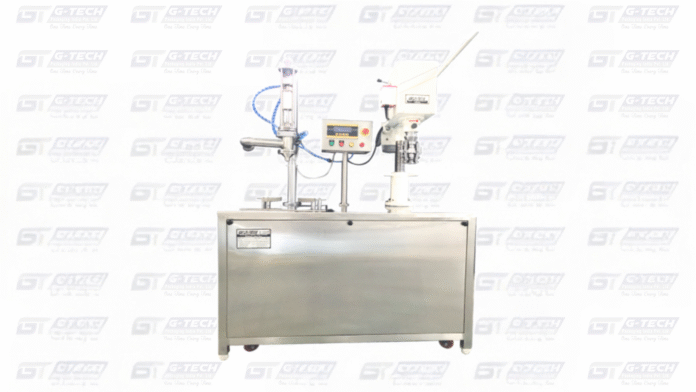
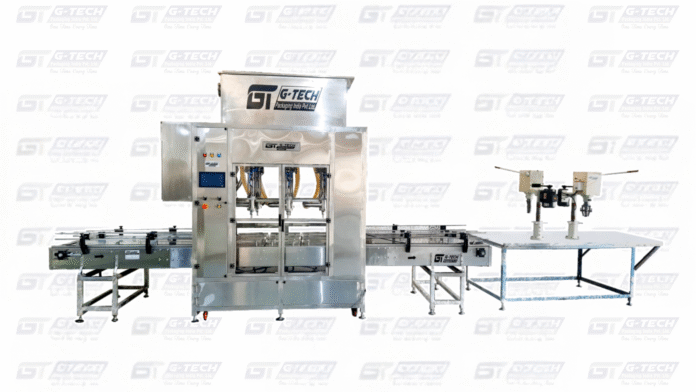
Many filling, capping and sealing machines use compressed air to move cylinders, open valves and grip containers. The machine may be well built, but if the air supply is weak, wet or dirty, it will not run properly. Slow strokes, inconsistent filling, caps not tightening and frequent cylinder failures can all trace back to the compressor and air lines.
This guide explains how to choose an air compressor for packaging machine lines, how to estimate the air you need, and how to keep that air clean and dry.
Which Packaging Machines Use Compressed Air?
Air use depends on the machine design. Pneumatic piston fillers, many volumetric oil filling machines, nozzle up-down movements, stopper gates and some capping machines use air cylinders. Air is also used for blow-off, bottle stoppers and gates on conveyors. Servo-driven machines generally use less air because motors do the main work, but they may still need air for valves, stoppers or grippers. Our post on servo vs pneumatic filling machines explains that difference.
Step 1: Find the Air Requirement of Each Machine
Every pneumatic machine has a required working pressure and an air consumption figure, usually listed in the manual or data sheet. Air consumption is often shown in litres per minute (LPM) or cubic feet per minute (CFM). One CFM is about 28.3 litres per minute, so you can convert between the two.
- List every machine and device on the line that uses air.
- Write down each one’s working pressure and air consumption.
- Add the consumption figures to get the total demand.
- Note the highest working pressure any machine needs.
If a data sheet is missing, ask the machine manufacturer. Guessing often leads to a compressor that is too small.
Step 2: Add a Margin for Leaks and Growth
Real plants always lose some air through small leaks in fittings, hoses and valves. Lines also grow: a new capper or labeler gets added a year later. Compressor suppliers usually suggest adding a margin on top of calculated demand for leaks and future expansion. Discuss the margin with your compressor supplier rather than buying exactly what the machines need today.
Step 3: Choose the Right Type of Compressor
| Type | Where it fits | Points to consider |
|---|---|---|
| Reciprocating (piston) | Small lines, intermittent use | Lower purchase cost, more noise and heat, not ideal for continuous heavy duty |
| Rotary screw | Continuous running lines, several machines | Higher purchase cost, steadier output, suited to long shifts |
| Oil-free compressors | Food, pharma and sensitive products | Removes risk of oil carry-over into air that may contact product or packaging |
For a plant running multiple shifts, a compressor rated for continuous duty usually serves better than a small piston unit working at its limit all day.
Step 4: Keep the Air Clean and Dry
Compressed air contains moisture, and as it cools in the pipes, water collects. This water, along with oil and dust, travels to your machines. It washes away cylinder lubrication, causes rust inside valves and can make cylinders stick. For food, pharma and edible oil lines, air that touches the product or containers must be especially clean.
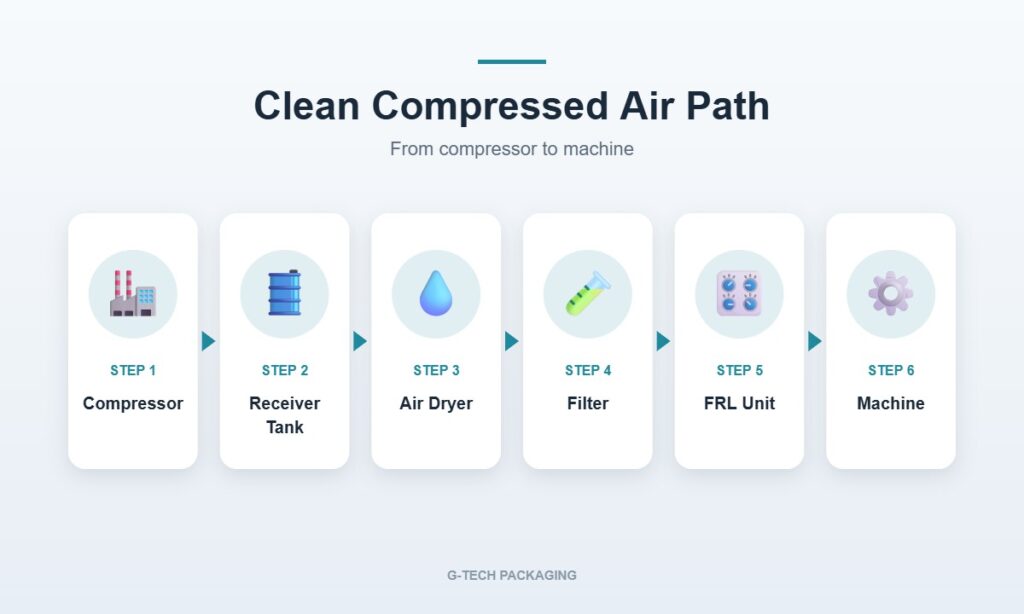
- Air receiver tank to store air and smooth out pressure swings
- Air dryer to remove moisture
- Filters at the compressor and before each machine
- Auto drain valves on the tank and filters
- A filter-regulator-lubricator (FRL) unit at each machine, as the machine manual specifies
Step 5: Plan the Air Piping
Undersized pipes and long runs with many bends cause pressure drop, so machines at the far end of the line get less pressure than those near the compressor. Use pipes of adequate size, keep runs as short as practical and slope lines slightly with drain points at low spots. A ring main around the production area helps keep pressure even at every machine.
Signs Your Air Supply Is the Problem
- Cylinders move slowly or unevenly
- Fill volumes vary on a pneumatic filler
- Pressure gauge at the machine drops when several machines run together
- Water appears in filter bowls or at exhaust ports
- Valves and cylinders fail more often than expected
Simple Compressed Air Maintenance
A compressor needs regular care, just like the packaging machines it feeds. Drain the receiver tank and filter bowls daily if they are not fitted with auto drains. Replace filter elements at the intervals the supplier recommends, and check the dryer is actually removing moisture. Walk the line once a week during a quiet period and listen for hissing at fittings and hoses, because even small leaks add up over a month. Keep the compressor room ventilated and clean, as hot, dusty intake air makes the compressor work harder and shortens its life.
Frequently Asked Questions
What pressure do packaging machines need?
It depends on the machine. Check the working pressure in the manual or data sheet for each machine and make sure your compressor can supply the highest one with some margin.
Is an air dryer really necessary?
For most packaging lines, yes. Moisture in compressed air damages cylinders and valves and can contaminate product areas.
Should food and pharma plants use oil-free compressors?
Many do, because it reduces the risk of oil in air that may contact the product or packaging. Discuss your air quality needs with your compressor supplier.
Talk to G-Tech Packaging India
G-Tech Packaging India Pvt. Ltd., Ahmedabad, designs and builds automatic filling, capping, induction sealing, labeling, leak testing, shrink tunnel and box sealing machines for Indian manufacturers. When we supply a line, we share the air pressure and consumption needed for each machine so you can plan your compressor correctly. Contact our team or email sales@gtechpackaging.in with your product, pack sizes and target output, and we will suggest a practical solution.