
Choosing an oil filling machine usually comes down to one basic question: should the machine measure each fill by volume or by weight? Both methods are proven, both are widely used in Indian edible oil and lubricant plants, and both can give you an accurate, consistent fill. But they suit very different pack sizes, budgets and production goals.
In this guide we compare volumetric vs weighmetric filling side by side, so you can decide which one fits your line before you talk to a supplier.
What Is a Volumetric Filling Machine?
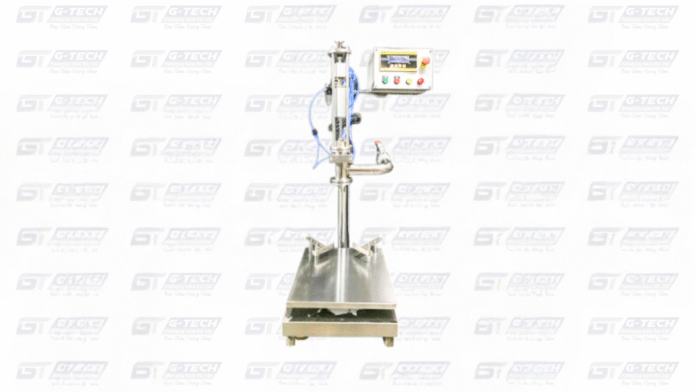
A volumetric filler dispenses a fixed, pre-set volume of liquid into every container. In most oil lines this is done with a piston: the piston draws a measured quantity of oil into a cylinder and then pushes it out through the nozzle. Servo-driven versions let the operator change the fill volume from a touchscreen instead of adjusting the stroke by hand.
Because there is no weighing step, the cycle is short and multiple heads can fill at the same time. That makes volumetric machines a natural fit for high-speed bottle lines. You can explore G-Tech’s range of volumetric oil filling machines for typical configurations.
What Is a Weighmetric Filling Machine?
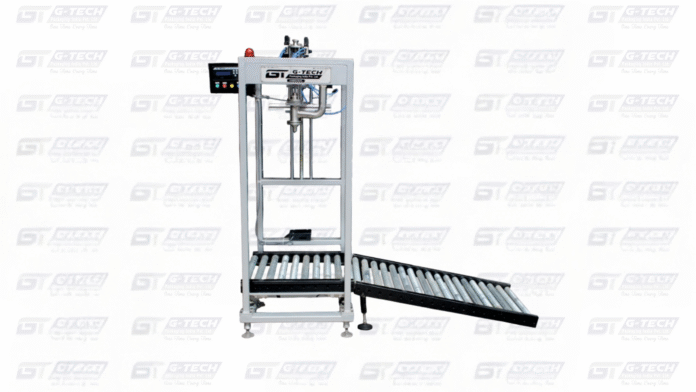
A weighmetric (gravimetric) filler places each container on a load cell and keeps filling until the target net weight is reached. Many machines fill in two stages: a fast bulk fill followed by a slow top-up for precision. The weight reading, not the volume, decides when the valve closes.
This approach shines with large packs such as 5 litre, 15 litre and 15 kg tins, and jerry cans, where even a small percentage error means a lot of oil given away. See G-Tech’s weighmetric oil filling machines for tin and can applications.
Volumetric vs Weighmetric: Side-by-Side Comparison
| Factor | Volumetric | Weighmetric |
|---|---|---|
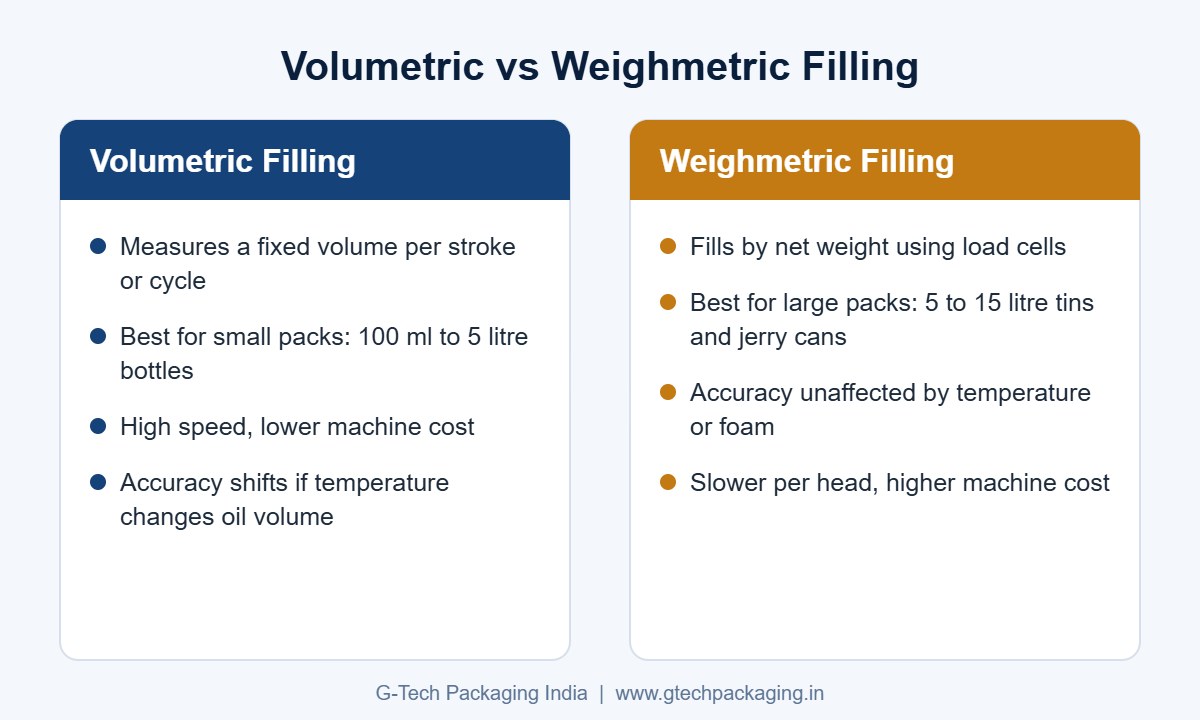
| How it measures | Fixed volume per cycle | Net weight on a load cell |
| Best pack sizes | Small and medium bottles (around 100 ml to 5 L) | Large tins, cans and jerry cans (around 5 L to 15 L and above) |
| Speed | High, ideal for multi-head bottle lines | Moderate, as each container is weighed |
| Effect of temperature | Oil expands when warm, so fill weight can drift | Not affected, since weight stays the same |
| Foaming products | Foam can cause under-fill | Handles foam better as weight is measured |
| Machine cost | Generally lower | Generally higher due to load cells and controls |
When a Volumetric Machine Makes More Sense
- You fill mostly 200 ml, 500 ml, 1 litre or 2 litre bottles
- You need high output per hour from a compact line
- Your product temperature stays fairly stable through the day
- You want a lower initial investment and simpler maintenance
When a Weighmetric Machine Makes More Sense
- You pack 5 litre, 15 litre or 15 kg tins and jerry cans
- Your label declares net weight rather than volume
- Oil temperature changes between morning and afternoon shifts
- Product giveaway on large packs is eating into your margins
Many oil mills actually run both: a volumetric line for retail bottles and a weighmetric filler for bulk tins. If your product mix covers both ranges, planning for two machines can be cheaper in the long run than forcing one method to do everything.
Five Questions to Ask Before You Buy
- What pack sizes will you run in the next 3 to 5 years? Buy for where your business is heading, not only today’s orders.
- How is quantity declared on your label? Legal Metrology rules allow only limited error on the declared quantity, so your filling method should match the way you declare it.
- What output do you need per shift? This decides the number of filling heads.
- How viscous is your product? Thin edible oils and thicker lubricants or gear oils may need different nozzles and pumps.
- What comes after filling? Make sure the filler can be linked to your capping machine, induction sealer and labeler as one line.
Frequently Asked Questions
Which is more accurate, volumetric or weighmetric filling?
Both can be highly accurate. Weighmetric filling is usually more consistent for large containers and for products whose volume changes with temperature, while a well-calibrated servo volumetric filler is very accurate for small bottles.
Can one machine handle both bottles and tins?
Some machines can be set up for a range of pack sizes, but very small bottles and 15 litre tins usually need different machines for the best speed and accuracy.
Is weighmetric filling only for edible oil?
No. It is also used for lubricants, ghee, chemicals and other liquids packed in large containers where net weight matters.
Talk to G-Tech Packaging
G-Tech Packaging India in Ahmedabad designs and builds volumetric and weighmetric filling machines, along with capping, sealing and labeling equipment for complete oil packaging lines. Share your pack sizes and output target, and our team will suggest the right setup. Contact us or email sales@gtechpackaging.in.