The label is the first thing a buyer sees, so a wrinkled, bubbled or crooked label makes a good product look careless. On an automatic line, label defects also slow everything down, because operators stop the machine to peel and reapply labels by hand. Most labeling machine problems come from a handful of causes: web tension, speed matching, container condition, sensor setup and wear on rollers and pads.
This guide walks through the most common faults on sticker (self-adhesive) labeling machines and what your team can do about each one.
How a Sticker Labeling Machine Applies a Label
Labels come on a roll, stuck to a backing liner. The machine unwinds the roll, pulls the web over a sharp peel plate and the label separates from the liner as the liner bends back. A product sensor detects the container and a gap sensor detects the space between labels, so each label is dispensed at the right moment. The label touches the moving container and a wrap belt or wipe-down brush presses it smoothly onto the surface. The empty liner is wound onto a take-up reel.
For a clean result, the label must leave the peel plate at the same speed the container is moving, and the container must be clean, dry and upright.
Common Labeling Machine Problems and Their Causes
Wrinkles and creases
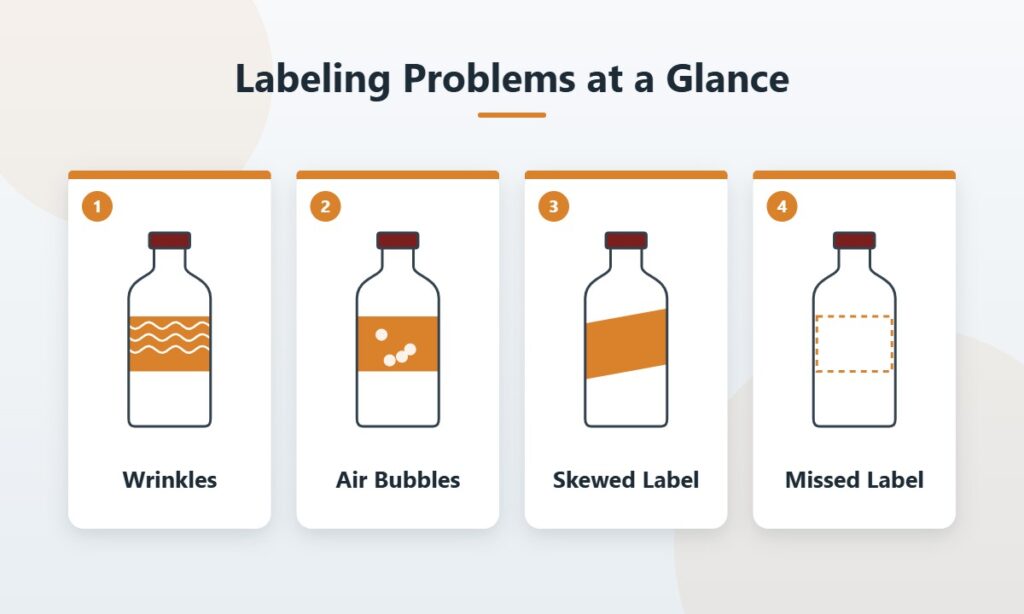
Wrinkles usually mean the label is not being laid down evenly. Typical causes are incorrect web tension, uneven wrap belt pressure, a label that is taller than the straight part of the container wall, or a tapered or slightly oval container. Very stiff label stock on a small diameter bottle can also crease.
Air bubbles
Bubbles appear when air is trapped between the label and the container. Weak wipe-down pressure, worn sponge pads, an oil film on the container surface, or condensation on cold-filled bottles are the usual reasons. In edible oil and dairy plants, a thin film of product or moisture on the bottle is a very common cause.
Skewed or misplaced labels
A crooked label means the container or the label is not where the machine expects it to be. Check container spacing and stability on the conveyor, guide rail settings, peel plate height and whether label dispensing speed matches conveyor speed. A mismatch makes labels stretch, bunch up or land off-centre.
Flagging (label edges lifting)
If the label overlap lifts after a few hours, the adhesive may not suit the container material or the label stock may be too stiff for the container diameter. This is a material question to discuss with your label printer.
Missed or double labels
These are usually sensor issues. The gap sensor may need recalibration for a new label roll, the product sensor may struggle with clear or reflective containers, or the die-cut gaps on the roll may be inconsistent.
Troubleshooting at a Glance
| Fault | Common causes | First fix to try |
|---|---|---|
| Wrinkles | Web tension, wrap pressure, label too tall, tapered container | Adjust tension and wrap belt, check label size |
| Air bubbles | Weak wipe-down, oily or wet surface | Clean and dry containers, check pads and pressure |
| Skewed labels | Spacing, guide rails, speed mismatch | Set rails, match dispensing speed to conveyor |
| Flagging | Adhesive or stock not suited to container | Review label material with supplier |
| Missed labels | Gap or product sensor setup | Recalibrate sensors for the current roll |
Preparing the Container Before Labeling
Many label defects are created upstream. Product splashing during filling leaves a film on the bottle, and cold products cause condensation. Setting filling nozzles to avoid splashing, cleaning containers and drying them with air before the labeler all help. A well-tuned liquid filling machine keeps bottles cleaner, which directly improves label quality. Plants handling dairy or chilled beverages should pay special attention to drying.
Routine Maintenance That Prevents Label Defects
- Clean adhesive build-up from the peel plate, rollers and wrap belt every shift.
- Inspect sponge pads and brushes for wear and replace them before they harden.
- Check that the label roll is threaded correctly and the web runs straight.
- Recalibrate the gap sensor whenever you load a new label design or roll.
- Store label rolls in a cool, dry place so the adhesive and stock behave consistently.
- Keep a short recipe for each container: speed, tension, wrap pressure and sensor settings.
G-Tech builds sticker labeling machines for round bottles, flat containers and jars used across edible oil, personal care and chemical lines. For more on why good labels matter commercially, read our post on how smart labelling helps products stand out on the shelf.
Frequently Asked Questions
Why do my labels get air bubbles?
Usually because of weak wipe-down pressure, worn pads, or an oily or damp container surface. Clean and dry the containers first, then check the wrap belt or brush pressure.
Why are my labels coming out crooked?
Crooked labels point to container spacing, guide rail setup, peel plate height or a speed mismatch between the label dispenser and the conveyor.
Can one labeling machine handle different bottle sizes?
Many machines can, with adjustments to guide rails, wrap belt position and sensor settings. Saving a recipe for each container makes changeovers faster and more consistent.
Talk to G-Tech Packaging India
Planning to upgrade your labeling step? G-Tech Packaging India Pvt. Ltd., Ahmedabad, designs and builds liquid filling, capping, induction sealing, labeling, leak testing, shrink tunnel and box sealing machines for Indian manufacturers. Share your container, product and output target with our team through the Contact Us page or email sales@gtechpackaging.in, and we will suggest a practical machine setup for your line.