One of the most common mistakes we see when a factory buys its first automatic line is choosing the machine by its brochure speed. The machine arrives, runs well, and still the dispatch team is short of stock every month-end. In most cases the machine is fine. The capacity was simply worked out the wrong way.
This guide walks through a practical filling machine capacity calculation that any plant owner or production manager can do with a calculator. It covers bottles per minute, the number of filling heads, real-world efficiency, and how the filler has to match the capper, sealer and labeler downstream.
Start With Demand, Not With Machine Speed
Capacity planning begins with how many filled units you need to dispatch, not how fast a machine can go. Collect three numbers from your sales and production team:
- Peak monthly volume for each pack size, in units (not litres). Use your busiest season, such as the festive months for edible oil or the pre-monsoon season for agro-chemicals.
- Working days per month you can realistically run, after Sundays, holidays and planned maintenance.
- Productive hours per shift and the number of shifts. An 8-hour shift rarely gives 8 hours of filling once start-up, cleaning, breaks and changeovers are removed.
Divide the peak monthly units by working days, then by productive hours, then by 60. The answer is the bottles per minute (BPM) your line must actually deliver.
The Basic Filling Machine Capacity Calculation
Here is the core formula in plain words:
- Required BPM = Peak monthly units ÷ (Working days × Productive hours × 60)
- Rated BPM needed = Required BPM ÷ Overall line efficiency
- Add a growth margin for the next two to three years of expansion
Take a simple illustrative example. Suppose you must fill 6,00,000 one-litre bottles in your busiest month, you work 25 days, and you get about 7 productive hours in a single shift. Required BPM = 6,00,000 ÷ (25 × 7 × 60) = about 57 bottles per minute. If your line runs at around 75 percent overall efficiency, the rated speed you should look for is roughly 57 ÷ 0.75 = 76 BPM, before any growth margin. These figures are only an example to show the method; your numbers will be different.

Why Line Efficiency Matters So Much
No liquid packaging line runs at its rated speed for every minute of a shift. Efficiency is lost through bottle jams on the conveyor, cap feeding stoppages, label roll changes, product tank refills, minor adjustments and operator breaks. Many plants track this as OEE (overall equipment effectiveness), which combines availability, performance and quality.
If you have an existing semi-automatic or manual setup, measure your real output for a week and compare it with the theoretical output. That ratio is a far better efficiency figure to use than any assumption. For a new automatic line, ask your machine supplier to discuss realistic efficiency for your product and container, and plan conservatively.
How Container Size and Product Change the Speed
The same machine will fill different speeds for different jobs. Fill time depends on fill volume, product viscosity, foaming behaviour, nozzle size and whether the nozzle dives into the container. A thin liquid like water fills much faster than a thick lubricant or ghee. Large containers such as 5 litre cans need more time per cycle than 200 ml bottles.
That is why capacity should be calculated for each pack size in your range, not only for the most popular one. The slowest pack in your peak season often decides whether the line keeps up.
| Factor | Effect on output | What to check |
|---|---|---|
| Fill volume | Larger volume = longer fill time | BPM for every pack size |
| Viscosity | Thicker liquid = slower fill | Trial with your actual product |
| Foaming | Foamy liquids need slower or bottom-up filling | Nozzle type and fill method |
| Number of heads | More heads = more bottles per cycle | Space and budget for heads |
| Changeovers | Each size change stops the line | Changeover time per shift |
Choosing the Number of Filling Heads
Once you know the rated BPM you need, the number of heads follows. On a linear machine, all heads fill together in one cycle, so output per minute is roughly the number of heads multiplied by cycles per minute. A cycle includes indexing bottles in, nozzles moving down, filling, nozzles moving up and bottles moving out.
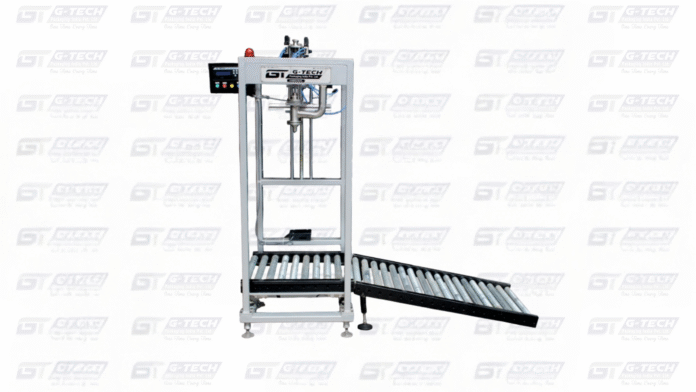
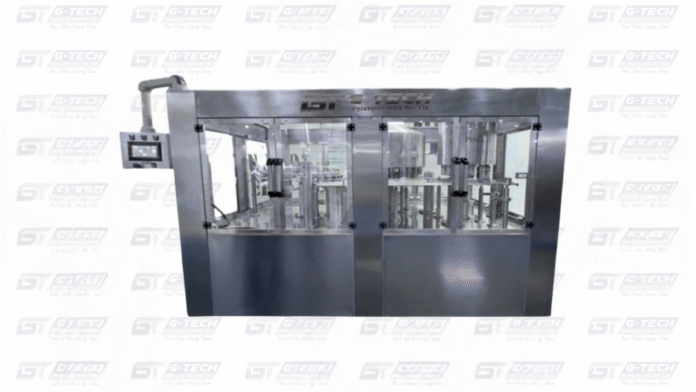
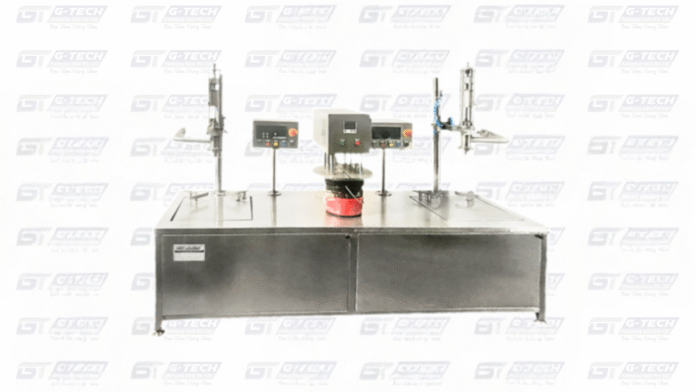
For edible oil and lubricants, volumetric oil filling machines and weighmetric oil filling machines are both available in multi-head versions, and the right head count depends on your fill volumes. For higher speeds on smaller bottles, a rotary monoblock filling and sealing machine may suit better than a linear layout.
Match the Whole Line, Not Just the Filler
A filler is only as fast as the slowest machine after it. If the filler runs at 80 BPM but the capping machine can only handle 60, your line output is 60. The same logic applies to induction sealing, labeling, leak testing, shrink wrapping and carton sealing.
A common practice is to size machines after the filler slightly faster than the filler, so they can catch up after a short stoppage and keep the conveyor from backing up. A small accumulation zone before the capper or labeler also helps absorb short stops. You can read more about arranging machines in our guide on bottle filling line layout.
Plan for Growth Without Overbuying
It is sensible to add a margin for future demand, but buying a machine far larger than needed ties up capital and floor space. Practical ways to keep room for growth include:
- Choosing a machine frame that can accept extra filling heads later
- Planning floor space and conveyor length for one more machine in the line
- Adding a second shift before buying a second line
- Keeping change parts ready for new pack sizes you expect to launch
Frequently Asked Questions
What is a good efficiency figure to use for capacity planning?
It depends on your product, containers, operators and the number of changeovers. Measure your current line if you have one. For a new line, discuss realistic efficiency with your supplier and plan conservatively rather than assuming the machine will run at full rated speed.
Should I calculate capacity in litres or in bottles?
Always calculate in units (bottles, jars or cans) for each pack size. Machine speed is measured per container, so a capacity figure in litres can hide a big difference between small and large packs.
Can I increase capacity later on the same machine?
Often yes, if the machine design allows extra heads or the line has space for a faster downstream machine. Discuss this at the time of purchase so the frame, conveyor and controls are planned for it.
Talk to G-Tech Packaging About Your Line
G-Tech Packaging India Pvt. Ltd., Ahmedabad, designs and builds automatic filling, capping, induction sealing, labeling, leak testing, shrink tunnel and box sealing machines for Indian manufacturers. If you are planning a new line or want help with a filling machine capacity calculation, share your container sizes, product details and target output with our team and we will suggest a practical machine configuration. Contact us here or write to sales@gtechpackaging.in.