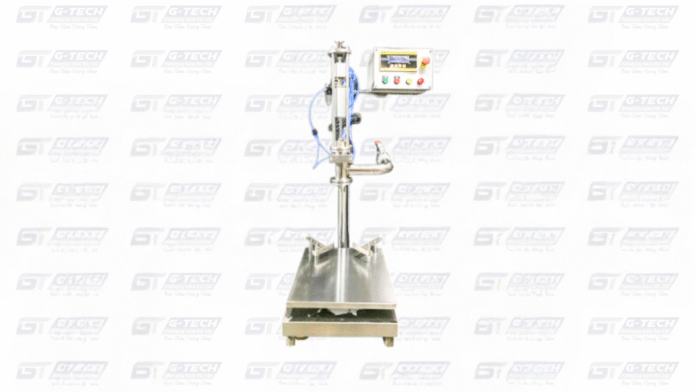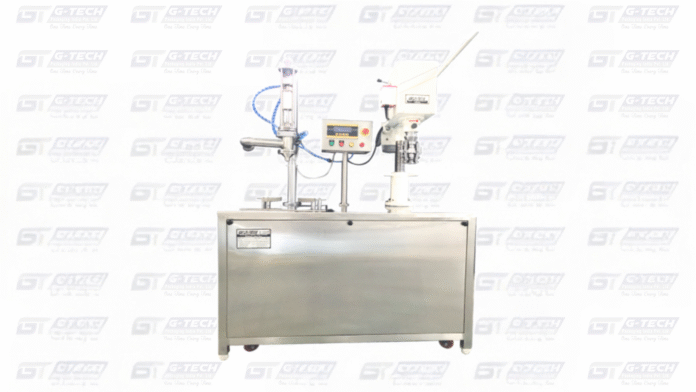

India’s personal care market keeps growing, and new shampoo, conditioner, body wash and hair oil brands launch every month. Many start with contract manufacturing or manual filling, and then reach a point where demand outgrows hand filling. That is usually when the search for a shampoo filling machine begins.
Shampoo is not as simple to fill as water. It is thick, it foams, and it is packed in a wide variety of attractive bottle shapes with pump or flip-top caps. A machine that works well for edible oil may not give clean results on shampoo. This guide covers what personal care brands should look for before they invest.
Why Shampoo Is Tricky to Fill
- Viscosity: shampoos and gels are thicker than water and their thickness changes with temperature. A machine must push product accurately even when it flows slowly.
- Foaming: shampoo contains surfactants that foam when agitated. Foam fills the bottle neck before the full quantity is in, causing overflow or under-filling.
- Stringing and dripping: thick liquids form a thread between nozzle and bottle, leaving drops on the neck and label area.
- Fancy bottles: oval, flat or tapered bottles look great on the shelf but are less stable on conveyors.
Filling Methods That Suit Shampoo
The right filling principle depends on your product range. Most personal care plants use one of these approaches:
| Filling method | Strengths | Watch out for |
|---|---|---|
| Piston (volumetric) filling | Handles thick liquids, consistent volume | Needs proper cleaning between products |
| Servo-driven pump filling | Easy volume change from the screen, smooth flow control | Pump choice must match viscosity |
| Bottom-up (diving nozzle) filling | Nozzle rises as bottle fills, reducing foam | Slightly slower per cycle |
| Gravity / overflow filling | Simple, good for thin liquids | Not ideal for thick shampoos |
For foaming products, a diving nozzle that fills from the bottom of the bottle upward is often the deciding feature. Combined with controlled filling speed, it keeps foam to a minimum. Anti-drip or shut-off nozzles reduce stringing so the neck stays clean for capping. You can read more about nozzle design in our post on anti-drop filling nozzles.
G-Tech Packaging offers a range of liquid filling machines, and our team helps match the filling principle and nozzle to your actual product, so it is worth sharing a sample during discussions.
Capping, Sealing and Labeling for Personal Care
Filling is only one step. A complete personal care line usually follows this sequence:
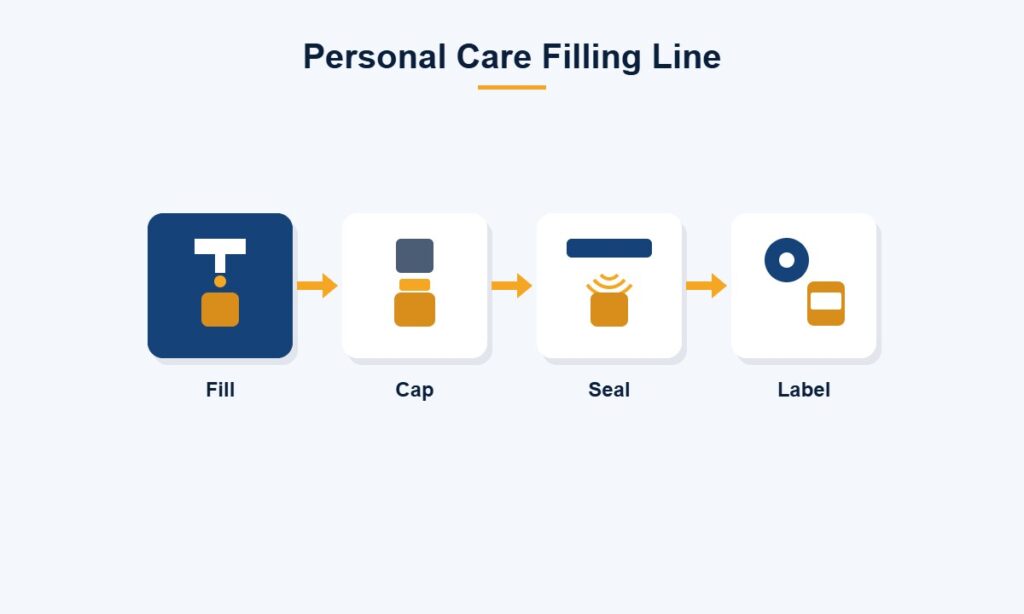
- Capping: pump dispensers, flip-top caps and screw caps each need suitable chucks or pressing heads. Pump caps need careful orientation so the nozzle faces the right way. See our capping machines.
- Induction sealing: many brands add a foil seal under the cap for tamper evidence and leak protection during transport, using an online induction sealing machine.
- Labeling: front-and-back labeling is common for personal care, and oval or flat bottles need correct label positioning.
Questions to Ask Before You Buy
- What range of viscosities will you fill, from thin hair oils to thick conditioners?
- How many bottle sizes and shapes do you need, and how often will you change over?
- What output do you need today, and what do you expect in two to three years?
- Which contact parts are stainless steel, and are they easy to remove for cleaning?
- Can the same machine handle your other products, such as hand wash or body lotion?
- What after-sales support, spares and training are available?
Plan for the product range you will have, not just the single shampoo you sell today. Personal care brands tend to expand quickly, and a flexible machine with quick changeover saves a second purchase later. Learn more about the sector on our personal care industry page.
Keeping a Personal Care Line Clean
Hygiene matters for products that touch skin and hair. Choose contact parts that can be dismantled without special tools, and set a cleaning routine for every product change. Flush the system with warm water or a suitable cleaning solution, check seals and O-rings for wear, and dry parts before reassembly. Consistent cleaning also prevents fragrance carry-over between variants.
Frequently Asked Questions
Can one machine fill both shampoo and hair oil?
Often yes, if the filling system and nozzles are selected for the range of viscosities you handle. Changeover and thorough cleaning between products are important to avoid mixing.
How do I stop shampoo from foaming during filling?
Bottom-up diving nozzles, controlled filling speed and correctly sized nozzles are the main solutions. Product temperature and formulation also play a role.
Do I need induction sealing for shampoo bottles?
It is not compulsory for every product, but many brands use it to prevent leakage in transit and to show customers the pack has not been opened.
Talk to G-Tech Packaging India, Ahmedabad
Launching or scaling a shampoo, conditioner or body wash brand? G-Tech Packaging India, Ahmedabad can help you plan filling, capping, sealing and labeling for your personal care range. Share your product, container sizes and target output with our team, and we will suggest a practical machine set-up for your plant. Contact G-Tech Packaging India or email us at sales@gtechpackaging.in.