When you ask for a quotation for a liquid filling machine, one line in the specification often raises questions: the steel grade of the contact parts. Some quotes say SS 304, others say SS 316 or SS 316L, and the price changes with the choice. Picking the right grade protects your product, your machine and your budget.
This guide explains the difference between SS 304 and SS 316 in simple terms, which parts of a filling machine the choice affects and how to decide based on the liquid you fill.
What Is the Difference Between SS 304 and SS 316?
Both are austenitic stainless steels, the family used widely in food, pharma and chemical equipment. SS 304 contains chromium and nickel and resists corrosion well in most everyday conditions. SS 316 adds molybdenum, which gives it better resistance to chlorides, salts and many acids. The L versions, SS 304L and SS 316L, have lower carbon, which helps the steel keep its corrosion resistance around welds.
| Point | SS 304 | SS 316 / 316L |
|---|---|---|
| Key alloying elements | Chromium, nickel | Chromium, nickel, molybdenum |
| General corrosion resistance | Good | Better |
| Resistance to chlorides and salts | Moderate | Higher |
| Resistance to many acids and aggressive chemicals | Moderate | Higher |
| Typical cost | Lower | Higher |
| Common use in filling machines | Frames, panels, non-contact parts, many food and oil contact parts | Contact parts for pharma, corrosive chemicals, salty or acidic liquids |
Which Parts of a Filling Machine Does This Affect?
Not every part of a liquid filling machine needs the same grade. The decision matters most for contact parts, the parts your liquid actually touches:
- Product hopper or buffer tank
- Piston cylinders or flow meters
- Valves and manifolds
- Filling nozzles
- Product pipes and fittings
Frames, body panels, guards and conveyor structures do not touch the product. Many manufacturers use SS 304 or other suitable materials for these even when contact parts are SS 316. This keeps the cost sensible without compromising product safety.
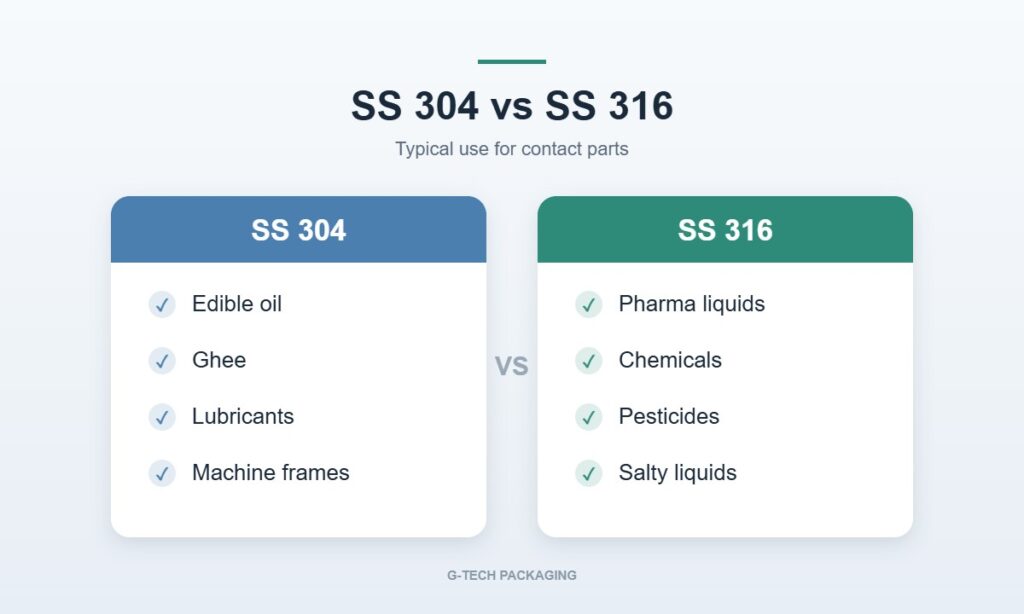
How to Choose the Right Grade for Your Liquid
Edible oil, ghee and lubricants
Edible oils, ghee and lubricant oils are generally not corrosive to stainless steel. SS 304 contact parts are commonly used for these products. What matters more is hygiene, smooth internal finish and easy cleaning, so food residue does not collect in corners.
Pharmaceutical liquids
Pharma plants usually prefer SS 316L contact parts because of strict cleaning routines, frequent contact with cleaning agents and the need to show material traceability during audits. Ask for material test certificates for contact parts. Our post on hygiene standards in pharmaceutical liquid filling covers related points.
Pesticides, agro-chemicals and industrial chemicals
Pesticide and chemical formulations vary a lot. Some are mild, others contain solvents, acids or chlorides that can attack SS 304. For these, check the compatibility of the exact formulation with your machine supplier. SS 316 is often chosen, and some liquids need special seals, gaskets or other materials altogether.
Salty, acidic or high-chloride products
Brines, some sauces, vinegar-based products and liquids with high salt content are where SS 316 shows a clear advantage. Using SS 304 here can lead to pitting over time.
Don’t Forget Seals, Gaskets and Finish
Steel grade is only part of the story. O-rings, gaskets and seals must also suit the liquid. A machine with SS 316 parts can still leak if the seals swell or harden in contact with a solvent. Internal surface finish matters too. Smoother surfaces are easier to clean and hold less residue, which is why pharma and food plants often specify polished contact surfaces.
Questions to Ask Before You Order
- Which parts are SS 304 and which are SS 316 or 316L?
- Can you provide material test certificates for contact parts?
- What seal and gasket materials will be used for my liquid?
- How are contact parts cleaned and can they be removed easily?
- Will the same machine be used for other liquids in the future?
Thinking about future products is important. If you might later fill a more aggressive liquid on the same machine, choosing SS 316 contact parts now can save a costly change later.
Looking After Stainless Steel Contact Parts
Even the right grade needs care. Clean contact parts with cleaning agents that suit stainless steel, and rinse well afterwards so chemical residue does not sit on the surface. Avoid steel wool or carbon steel brushes, as small iron particles left behind can start rust spots. Dry parts before storage and inspect nozzles, valves and cylinders regularly for discolouration or pitting. Catching these signs early protects both the machine and the quality of every bottle you fill.
Frequently Asked Questions
Is SS 304 good enough for an edible oil filling machine?
In most cases, yes. Edible oils are not corrosive to SS 304. Focus on hygienic design and easy cleaning, and confirm the choice with your machine supplier.
Why do pharma filling machines use SS 316L?
SS 316L offers better corrosion resistance, handles frequent cleaning agents well and keeps its properties around welds. It is the common choice for pharma contact parts.
Does the whole machine need to be SS 316?
No. Usually only contact parts need SS 316. Frames and panels can be SS 304 or another suitable material, which keeps cost under control.
Talk to G-Tech Packaging India
G-Tech Packaging India Pvt. Ltd., Ahmedabad, designs and builds automatic filling, capping, induction sealing, labeling, leak testing, shrink tunnel and box sealing machines for Indian manufacturers. We help Indian manufacturers choose the right material of construction for each liquid and build filling machines to suit. Contact our team or email sales@gtechpackaging.in with your product, pack sizes and target output, and we will suggest a practical solution.