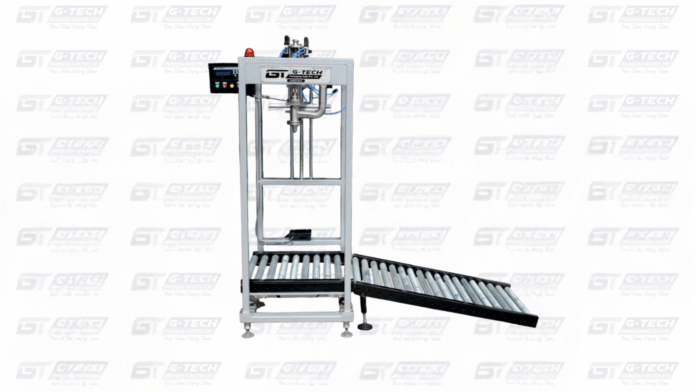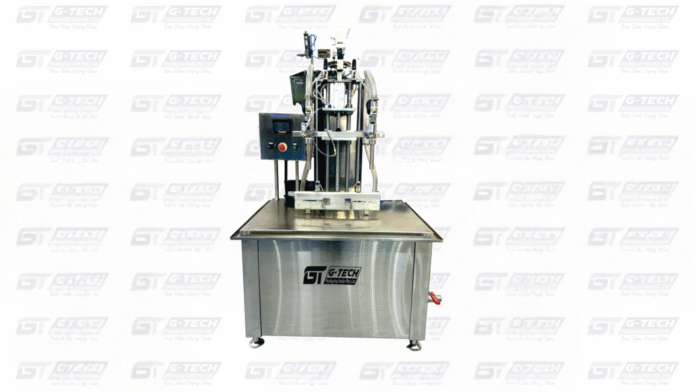

Accuracy is crucial in industries where product weight has a direct impact on profit. Every drop matters when working with chemicals, lubricants, or edible oils. The Automatic Linear Gross Weight Filling Machine from G-TECH Packaging is designed to produce bulk and high-viscosity products with remarkable accuracy, dependability, and efficiency. The future of industrial liquid filling is represented by this machine, which is built for heavy-duty performance.
A Gross Weight Filling Machine: What Is It?
Products are measured and filled using a gross weight filling system, which takes into account the combined weight of the product and the container. This system uses load cell technology to ensure precise weight consistency in every fill, unlike volumetric fillers that rely on preset volume measurements. This makes it perfect for industries where precise product quantity is essential for cost control and compliance.
Containers pass linearly through each filling station in the conveyor-based Automatic Linear Gross Weight Filling Machine. The tare weight is automatically detected by the system, which then fills to the target weight and stops exactly at the predetermined point.
The Advanced Features and Technology of G-TECH
The Linear Gross Weight Filling Machine from G-TECH achieves unparalleled accuracy by fusing intelligent automation with a sturdy mechanical design.
Important points to note are:
- Real-time feedback and accurate weight filling are guaranteed by load cell-based measurement.
- PLC & HMI Control System: Simple to use, records data, and allows for precise filling parameter adjustment.
- Heavy-Duty Construction: For enduring performance, industrial-grade components and stainless steel were used in its construction.
- The No-Container, No-Fill mechanism stops unintentional spills and product loss.
- Variable Filling Range: Fits large containers, tins, jars, and drums.
- Drip-Free Nozzles: Preserve hygiene and prevent product waste.
Every system can be tailored to the type of product, viscosity, and filling range, giving the operator flexibility and control.
Industries That Benefit from Gross Weight Filling
This technology is particularly effective for:
- Edible Oils: Mustard, sunflower, coconut, and refined oils.
- Lubricants & Greases: Automotive and industrial lubricants requiring precise filling.
- Chemicals: Solvents, detergents, and liquid chemicals where accuracy affects safety.
- Food & Beverages: Syrups, sauces, and bulk packaging liquids.
By maintaining consistent fill weights, companies reduce rework, avoid underfilling or overfilling, and enhance profitability.
Why Choose G-TECH’s Automatic Linear Gross Weight Filling Machine
G-TECH’s machine stands out for its engineering precision, durability, and user-friendly interface. Designed and manufactured in India, it meets international quality standards and supports high production efficiency.
Its modular structure makes it easy to integrate with capping and labeling systems—creating a seamless, fully automated packaging line.
Conclusion
G-TECH’s Automatic Linear Gross Weight Filling Machine represents a perfect balance of technology and practicality. By focusing on weight-based accuracy, it helps manufacturers maintain product quality, reduce wastage, and optimize production costs.
As industries continue to demand precision-driven automation, G-TECH remains at the forefront—delivering intelligent filling solutions that redefine industrial performance and reliability.