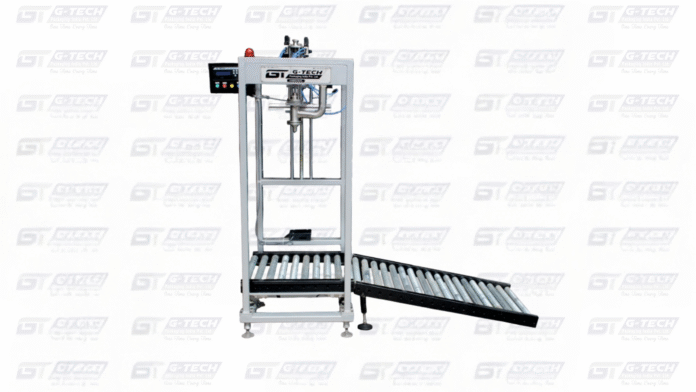
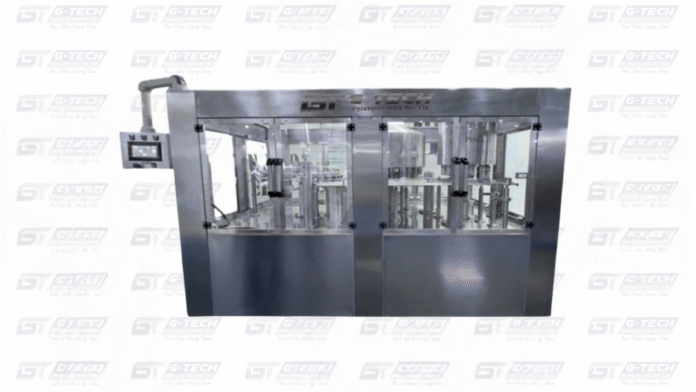
Toilet cleaner is one of the fastest moving household cleaning products in India, sold in every kirana shop and supermarket. For manufacturers, it is also one of the trickier liquids to pack. Many toilet cleaner formulations are acidic, some are thick gels, and almost all are packed in angled-neck HDPE bottles that do not behave like a normal round bottle on a conveyor.
A well-chosen toilet cleaner filling machine gives you clean, accurate fills, protects your operators and lasts for years. A poorly chosen one can corrode within months. This guide covers what to look for.
Why Toilet Cleaner Needs a Special Filling Machine
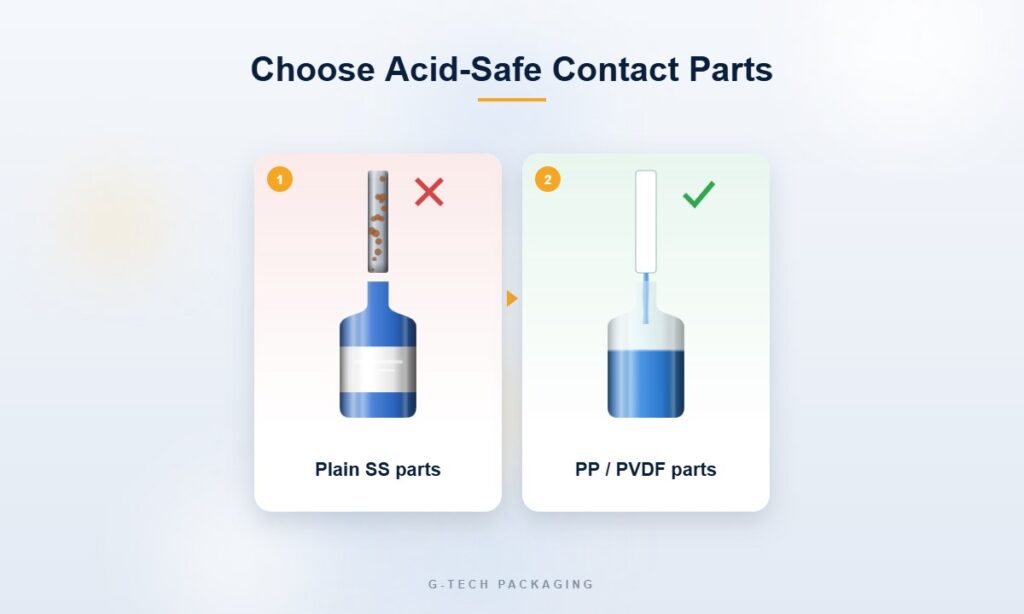
The main issue is chemistry. Several toilet cleaners contain acids that attack ordinary metals, including some grades of stainless steel, over time. If the parts that touch the product are not chemically compatible, you can see pitting, rust-coloured stains, leaking seals and contamination of the product. Fumes from acidic liquids can also affect electrical parts and the machine frame if they are not protected.
Other challenges include foaming during filling, a wide range of viscosities from thin liquids to thick gels, and odd bottle shapes with a curved neck that needs careful guiding and gripping.
Material Choice: The Most Important Decision
Always confirm the exact formulation with your chemical supplier and share its safety data sheet with your machine maker. Based on that, contact parts are selected from materials known to handle the product. The comparison below is a general guide only.
| Part | Common choice for acidic cleaners | Why it matters | |
|---|---|---|---|
| Tank and product pipes | PP, HDPE or other suitable plastics | Resist acid attack and do not stain the product | |
| Nozzles | PP, PVDF or similar engineering plastics | Direct contact with every fill | must stay smooth and drip-free |
| Seals and gaskets | PTFE, Viton or other compatible elastomers | Wrong seals swell, crack and leak | |
| Machine frame | Stainless steel with protective design, or coated structure | Fumes and splashes can still reach the frame | |
| Electrical panel | Sealed enclosure, placed away from fumes | Prevents corrosion of contacts and sensors |
For non-acidic or mildly alkaline cleaners, stainless steel contact parts may be fine. The point is to decide based on the actual product, not on habit.
Filling Methods Used for Toilet Cleaners
- Volumetric (piston or pump based) filling: good for thicker gels and where you need consistent volume per bottle.
- Gravity or time-based filling: simple and economical for thin, free-flowing liquids.
- Bottom-up or diving nozzles: the nozzle enters the bottle and rises as it fills, which reduces foaming and splashing.
- Anti-drip nozzles: stop drops landing on the bottle neck, which would otherwise stain labels and attack the cap area.
Explore our liquid filling machines to compare options for your product.
Handling Angled-Neck Bottles
The curved neck of a toilet cleaner bottle means the bottle must be held in the right orientation under the nozzle and the capper. Points to discuss with your supplier include:
- Bottle guides or grippers matched to your exact bottle shape.
- Stable conveyor transfer, since tall bottles with offset necks tip over easily.
- A capping head designed for the cap style you use, such as flip-top or child-resistant caps, available in our capping machine range.
- Space for leak testing, because a weak seal on a corrosive product is a safety risk in the shop.
Safety and Housekeeping on the Line
- Provide splash guards around the filling zone.
- Make sure operators wear gloves, goggles and suitable aprons as per your safety policy.
- Keep good ventilation or local fume extraction near open product.
- Flush the machine with water or the recommended cleaning solution at the end of each run, so product does not dry inside nozzles.
- Store spare seals and nozzles, as these are the parts that wear first.
If you also make floor cleaners, many of the same principles apply. Our earlier guide on the phenyl filling machine covers that product in detail. You can see the wider range of solutions we build for chemical manufacturers on our industry page.
Planning Output and Line Layout
Before fixing the machine size, work out how many bottles you need per shift, including peak season demand and future growth. Then plan the full line rather than the filler alone. A typical toilet cleaner line runs from bottle feeding to filling, capping, leak checking, labeling and finally cartoning with a box sealing machine.
- Keep the filling zone separate from the labeling area so splashes do not reach labels.
- Leave enough conveyor length between machines to absorb short stoppages.
- Plan drainage and a washing point near the filler for daily cleaning.
- Allow access space around every machine for maintenance and change parts.
Frequently Asked Questions
Can I use a stainless steel filling machine for toilet cleaner?
It depends on the formulation. For acidic toilet cleaners, stainless steel contact parts may corrode, so plastic parts such as PP or PVDF are often chosen. Share the product safety data sheet with your machine maker before deciding.
How do I stop foaming while filling toilet cleaner?
Bottom-up diving nozzles, a lower filling speed at the start of the fill, and smooth product flow without air entry all help reduce foam.
Can one machine fill both toilet cleaner and floor cleaner?
Often yes, if the contact materials suit both products and the machine is cleaned well between batches. Check compatibility for each formulation and plan change parts for different bottles.
Talk to G-Tech Packaging About Your Toilet Cleaner Filling Line
G-Tech Packaging India Pvt. Ltd., Ahmedabad, designs and builds automatic liquid filling, capping, induction sealing, labeling, leak testing, shrink tunnel and box sealing machines for Indian manufacturers. Share your product, container samples and target output with our team, and we will suggest a practical machine or full line for your plant.
Contact us here or write to sales@gtechpackaging.in to discuss your requirement.