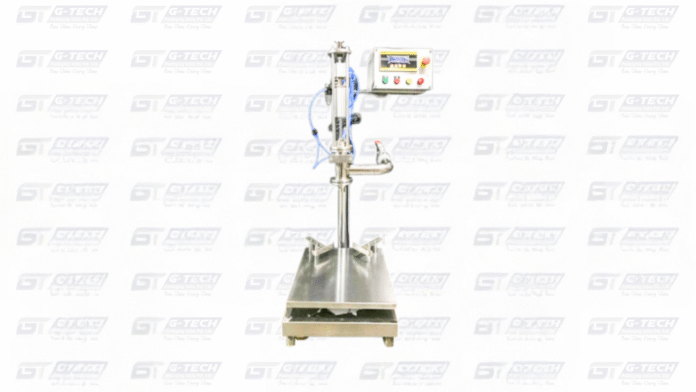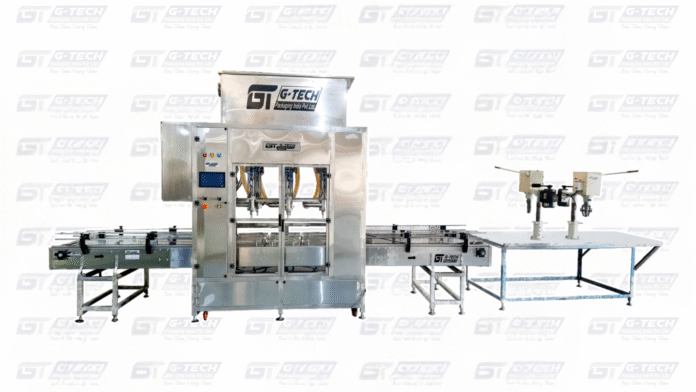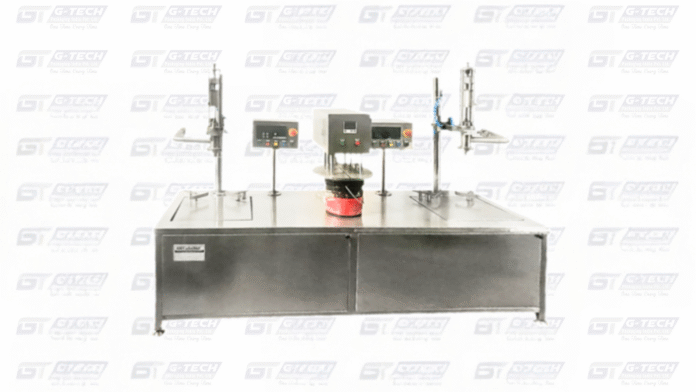

Every manufacturer packaging liquids — whether it’s edible oil, lubricants, or pharmaceutical formulations — knows the quiet cost hiding inside every batch: overfill. It doesn’t show up as a dramatic loss on any single bottle, but multiply a few extra millilitres by thousands of units a day, and it becomes one of the most overlooked drains on profitability in liquid packaging.
What Is “Product Giveaway” and Why Does It Matter?
Product giveaway refers to any liquid dispensed beyond the labelled or intended fill volume. A manual or poorly calibrated filling line might consistently overfill by 1–3%, which sounds negligible until you calculate it across a full production run.
For a plant filling 10,000 one-litre bottles a day with even a 2% overfill, that’s 200 litres of product given away for free, every single day. Over a month, that’s 6,000 litres. Over a year, it can add up to lakhs of rupees in lost raw material — money that never shows up as “waste” on any report, because it left the factory inside a sold product.
Why Manual and Older Systems Struggle with Accuracy
Manual and semi-automatic filling depends heavily on operator judgment, machine wear, and consistency of viscosity across a shift. A few common culprits:
- Viscosity variation: Oils and lubricants thicken or thin with temperature changes through the day, throwing off volume-based estimates.
- Operator fatigue: A human filling operator making 500+ decisions a day will naturally drift toward overfilling to “play it safe” and avoid regulatory shortfall penalties.
- Worn components: Pistons, valves, and nozzles that aren’t calibrated regularly lose precision over time.
- No real-time feedback: Without sensors or load cells, there’s no way to catch a fill error until a customer complaint or a compliance audit flags it.
How Automated, Precision Filling Solves This
Modern filling technology — particularly servo-driven volumetric and weighmetric systems — removes guesswork from the equation entirely.
Volumetric filling uses precisely calibrated pistons or flow meters to dispense an exact, repeatable volume regardless of operator input, cutting variation to a fraction of a percent.
Weighmetric (load cell) filling goes a step further by weighing each container in real time and adjusting the fill on the fly, which is especially valuable for products where density shifts with temperature — a common challenge in edible oils and lubricants.
Servo-based automation adds a further layer of control, allowing manufacturers to program exact fill parameters per SKU and switch between products or bottle sizes with minimal recalibration, minimising both overfill and underfill risk.
The compounding effect of these technologies isn’t just cost savings on raw material — it’s also regulatory safety. Underfilling, even unintentionally, can expose a business to penalties under weights-and-measures regulations, while chronic overfilling erodes margins that are often already thin in commodity categories like edible oil and industrial lubricants.
The Business Case Beyond Cost Savings
Precision filling isn’t only about protecting margin. It also:
- Builds brand trust through consistent product quantity across every unit, batch after batch.
- Reduces compliance risk by keeping fill volumes within legally permitted tolerance.
- Improves production planning, since consistent fill rates make raw material forecasting far more reliable.
- Supports scale, since automated systems maintain the same accuracy at 50 bottles per minute as they do at 5.
Making the Shift
For manufacturers still relying on manual or semi-automatic filling, the transition to automated volumetric or servo-based systems typically pays for itself faster than expected once giveaway savings are calculated against machine investment. It’s a rare upgrade where cost control and product quality improve simultaneously, rather than trading one for the other.
If your production line is still absorbing invisible losses through overfill, it may be time to look at where precision filling technology fits into your packaging operation — before those losses quietly become next year’s biggest missed opportunity.