An induction sealing machine looks simple from the outside: bottles pass under a head and come out with a foil seal bonded to the neck. The part that decides whether that seal is strong, weak or burnt is the coil inside the sealing head. Different caps need different coil shapes, and choosing the wrong one is one of the most common reasons a new sealer never quite performs as expected.
This guide explains the main induction sealing coil types – flat, tunnel and universal – how each one works, which caps suit each design, and what to check before you order an online induction sealing machine for your line.
How the Coil Does the Sealing
Inside the sealing head is a copper coil carrying high-frequency current. This creates an electromagnetic field just below the head. When a capped bottle passes through this field, the aluminium layer in the cap liner heats up. The heat melts the polymer layer on the foil, which bonds to the rim of the container. The cap itself, the bottle and the product are not heated directly.
Because the field is strongest close to the coil, the gap between the coil face and the foil matters a lot. The coil shape decides where the field is concentrated, which is why cap height, cap diameter and cap design all influence which coil type will work best.
The Three Main Induction Sealing Coil Types
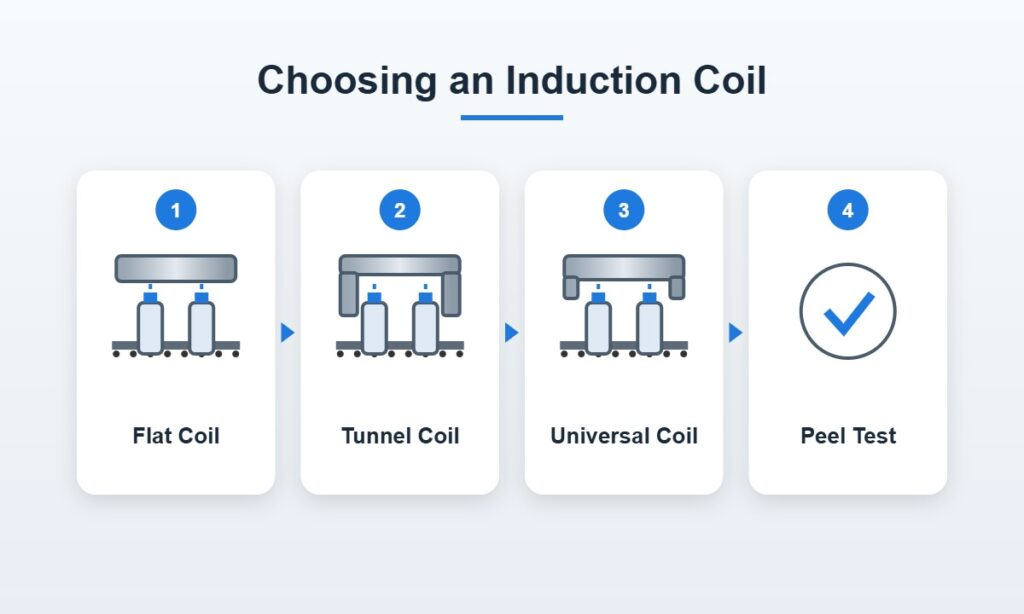
1. Flat coil (flat sealing head)
A flat coil sits in a flat-bottomed head that runs parallel to the conveyor. The field is directed straight down onto the top of the cap. It is the most common design and suits standard flat-top screw caps on bottles and jars of moderate diameter. Flat heads are easy to set: you adjust the head height so the gap to the cap top is small and even.
2. Tunnel coil (channel head)
A tunnel coil wraps around the sides of a channel that the caps travel through. The field enters the foil from the sides rather than only from the top. This suits tall caps, sports and push-pull caps, flip-top or dispensing closures, and caps where the foil sits deep below the top surface. Because the field reaches the foil from the sides, the height of the cap matters less, but the channel width must match the cap diameter.
3. Universal coil
A universal head combines features of both. It directs the field down and partly to the sides, so one head can handle a wider mix of cap styles and sizes. It is useful for contract packers and factories that run many SKUs on the same line, though a dedicated flat or tunnel coil can give better results for one specific cap.
Quick Comparison of Coil Types
| Coil type | Field direction | Best for | Watch out for |
|---|---|---|---|
| Flat | Downward onto cap top | Standard flat screw caps, wide-mouth jars | Tall or domed caps where foil is far from the head |
| Tunnel | From the sides of a channel | Tall caps, sports caps, flip-tops, small necks | Channel width must suit cap diameter |
| Universal | Down and partly sideways | Mixed SKUs and frequent cap changes | May need slower speed than a dedicated coil |
How to Choose the Right Coil for Your Line
Start with your caps, not the machine. Bring sample bottles with caps and liners fitted, and check these points with your supplier:
- Cap height and shape: flat-top caps usually suit a flat coil; tall, domed or dispensing caps usually need a tunnel coil.
- Cap diameter range: very small and very large caps may need different heads or adjustable channels.
- Liner type: one-piece and two-piece foil liners behave differently; the liner supplier’s guidance on heat range is useful.
- Container material: PET, HDPE and glass need different foil sealing layers, which affects the settings, not just the coil.
- Line speed: faster lines give each cap less time under the head, so the coil and power must deliver enough energy in that time.
- Number of SKUs: if you change caps often, a universal head or quick-change heads can save downtime.
For oil, lubricant and agro-chemical bottles, flat-top caps on HDPE or PET containers are common, so many lines in the edible oil and lubricant and pesticide segments run a flat coil. Pharma and personal care lines often use smaller or dispensing closures, where a tunnel coil is more common – see our pharmaceutical packaging page for typical setups.
Setting Up the Coil Correctly
Even the right coil will give poor seals if it is not set properly. A few basics make a big difference:
- Set the head height so the gap between coil face and cap is small and the same along the full length of the head.
- Centre the bottles under the head using the guide rails, so the foil passes through the strongest part of the field.
- Match conveyor speed and power output; increase one only after checking the other.
- Make sure caps are tightened to a consistent torque before sealing, so the foil is pressed evenly onto the rim.
- Do peel tests at the start of every shift and after any cap or bottle change.
If you are already seeing weak, burnt or partial seals, our guide on induction sealing problems and fixes walks through the usual causes step by step.
Cooling and Coil Life
The coil and its electronics produce heat during long runs. Air-cooled systems use fans and are simpler to maintain, while water-cooled systems handle higher power and continuous duty better. Whatever the cooling type, keep filters and vents clean, avoid placing the machine next to hot equipment, and do not block airflow around the head. A coil that runs cool keeps its output steady and lasts longer.
Frequently Asked Questions
Can one induction sealing coil handle all my caps?
Sometimes. A universal coil handles many cap styles, but if your range includes both very tall dispensing caps and wide flat caps, separate heads or a quick-change setup usually give more reliable seals.
Why do tall caps seal poorly under a flat head?
In a tall cap the foil sits far from the coil face, so the field reaching it is weaker. A tunnel coil brings the field in from the sides, closer to the foil, which is why it suits tall and sports caps.
Does the coil type affect line speed?
Yes. The coil shape and the power available decide how much energy reaches the foil in the time the cap spends under the head. A well-matched coil allows higher speeds without weak seals.
Talk to G-Tech Packaging India
Not sure which sealing head suits your caps? Send us your bottle and cap samples or photos. G-Tech Packaging India Pvt. Ltd., Ahmedabad, designs and builds automatic filling, capping, induction sealing, labeling, leak testing, shrink tunnel and box sealing machines for Indian manufacturers. Share your container, cap and output details through our contact page or write to sales@gtechpackaging.in, and our team will suggest a practical setup for your line.