A shrink tunnel only does half the job. The other half is the film. The same tunnel can give a tight, glossy pack with one film and a wrinkled, burnt or loose pack with another. Many factories blame the machine for problems that actually come from using the wrong film, or the right film at the wrong settings.
This guide compares the three main types of shrink film for shrink tunnel lines – PVC, POF and PE – and explains how each one behaves in the tunnel, what it suits, and what to check when you set up or buy a shrink tunnel machine.
How a Shrink Tunnel Works with Film
Shrink film is stretched during manufacturing and then cooled, which “locks in” the stretch. When the film is heated again in the tunnel, it tries to return to its original size and shrinks tightly around the product or bundle. The tunnel supplies controlled hot air, and the conveyor decides how long the pack stays in the heat.
So three things must match: the film type and thickness, the tunnel temperature, and the conveyor speed. Change one and you usually need to adjust the others.
The Three Common Shrink Film Types
PVC shrink film
PVC film shrinks at relatively low temperatures and is easy to work with on basic machines. It is low cost and gives a decent finish for many non-food products. On the downside, it becomes brittle in cold conditions, can give off unpleasant fumes when heated, and is less preferred for food and pharma packs. Good ventilation around the tunnel is essential when running PVC.
POF (polyolefin) shrink film
POF film is clear, glossy and strong for its thickness. It shrinks evenly in both directions, resists tearing and stays flexible in cold storage. Food-grade versions are widely used for retail packs, cartons and multi-packs. POF usually needs slightly more heat than PVC and good air flow, but it gives a cleaner look and does not release chlorine-based fumes.
PE (polyethylene) shrink film
PE film is thicker and tougher. It is the usual choice for bundling – for example, wrapping groups of bottles or jars into collated packs without a carton. It needs higher temperature and longer time in the tunnel, and the finish is less glossy, but it holds heavy loads well and protects packs during transport.
PVC vs POF vs PE at a Glance
| Point | PVC | POF | PE |
|---|---|---|---|
| Heat needed | Lower | Medium | Higher |
| Clarity and gloss | Good | Very good | Moderate |
| Strength | Moderate | High for its thickness | Very high |
| Cold storage | Can turn brittle | Stays flexible | Stays flexible |
| Typical use | Basic retail packs | Retail, food, cartons | Bottle and jar bundles |
| Fumes when heated | Yes, needs ventilation | Minimal | Minimal |
Matching Film to Your Products
- Single bottles, jars or small cartons for retail display: POF is usually the best balance of look and strength.
- Bundles of 6, 12 or more bottles: PE film handles the weight and gives a firm collation.
- Low-cost, low-volume non-food packs: PVC can work if the area is well ventilated.
- Food, dairy and beverage packs: use food-grade film and ask the film supplier for compliance documents.
Industries such as food and beverages and personal care often run POF for consumer packs, while water and edible oil plants commonly use PE for bundles going to distributors.
Setting the Tunnel for Your Film
Once you choose the film, the tunnel setup decides the result. Use this simple sequence when starting a new film or product:
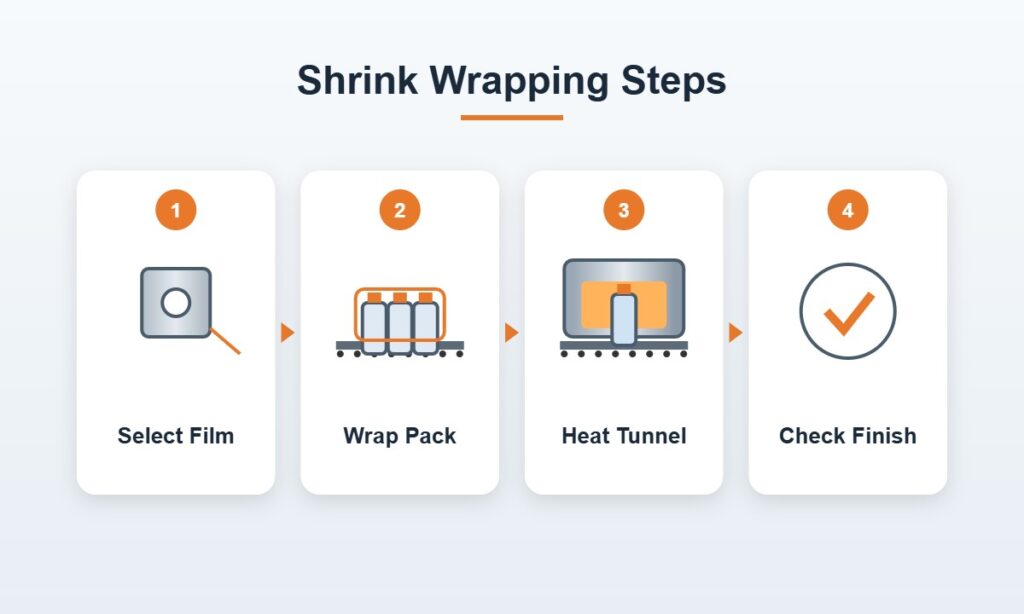
- Start at the film supplier’s recommended temperature range and a moderate conveyor speed.
- Run a few test packs and check for loose film, holes, burn marks or “dog ears” at the corners.
- If film is loose, slow the conveyor slightly or raise the temperature in small steps.
- If film burns or holes appear, lower the temperature or speed up the conveyor.
- Adjust air flow direction so heat reaches all sides of the pack evenly.
- Record the final settings for each product and film, so operators can repeat them.
For packs that still come out wrinkled or uneven after these steps, our guide on shrink tunnel problems and practical fixes covers the common causes in more detail.
Film Thickness and Cost
Thicker film is not always better. A thinner, stronger film like POF can protect a pack as well as a thicker PVC film while using less material and less heat. Ask your film supplier for trial rolls in two or three thicknesses and test them on your actual tunnel before placing a large order. Count rejected packs, energy use and appearance, not just the price per kilo.
Storing Shrink Film Properly
Shrink film reacts to heat, so how you store it affects how it performs on the machine. Keep rolls in a cool, dry, shaded area away from the tunnel, ovens and direct sunlight. Film stored in a hot godown can partly pre-shrink, which leads to uneven shrinking and wrinkles later. Store rolls flat or on proper racks so the edges are not damaged, and use older stock first.
Frequently Asked Questions
Can I run PVC, POF and PE on the same shrink tunnel?
Many tunnels can handle more than one film, as long as the temperature range, air flow and conveyor speed can be adjusted to suit each film. PE bundling often needs higher heat and longer dwell time, so check the tunnel’s range before switching.
Which shrink film is best for food products?
Food-grade POF is widely used for food and beverage retail packs because it is clear, strong and does not release chlorine-based fumes. Always ask the supplier for the relevant food-contact documents.
Why does my film tear or form holes in the tunnel?
Usually the temperature is too high, the pack stays in the heat too long, or the film is too thin for the product edges. Lower the heat, increase speed slightly or try a stronger film.
Talk to G-Tech Packaging India
Planning a shrink wrapping setup or changing your film? G-Tech Packaging India Pvt. Ltd., Ahmedabad, designs and builds automatic filling, capping, induction sealing, labeling, leak testing, shrink tunnel and box sealing machines for Indian manufacturers. Share your container, cap and output details through our contact page or write to sales@gtechpackaging.in, and our team will suggest a practical setup for your line.