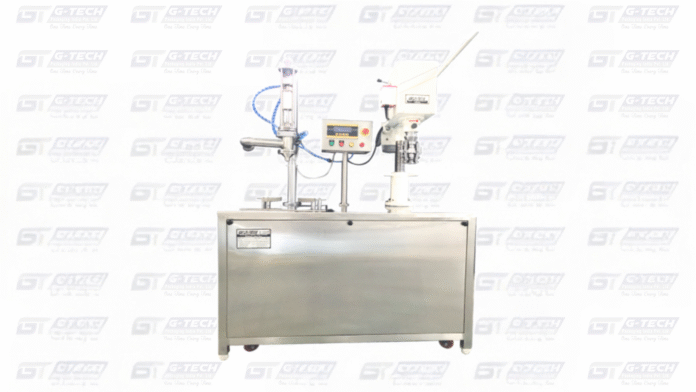
A carton sealer is often the last machine on a bottling line, and it is easy to ignore until cartons start opening in the godown or during transport. When that happens, the cause is very often the tape – the wrong adhesive, the wrong width, or tape loaded incorrectly on the taping head.
This guide explains how to choose the right box sealing machine tape, how it should be loaded and threaded, and how to fix the most common tape-related sealing problems on an automatic box sealing machine.
How the Taping Head Uses Tape
In a typical carton sealer, side belts or top and bottom belts push the carton forward. As the carton touches the front roller of the taping head, tape is applied to the leading face, pressed along the flaps, and then cut by a blade as the carton passes. A rear roller wipes the tail of the tape down onto the trailing face.
For this to work smoothly, the tape must unwind with steady tension, stick instantly on contact, and cut cleanly. Tape that is too stiff, too weak or the wrong size will cause poor wipe-down, loose tails or jams.
Choosing the Right Tape
Adhesive type: hot-melt vs acrylic
Most machine tapes are BOPP film with either hot-melt (rubber-based) or acrylic adhesive. Hot-melt adhesive grabs quickly and holds well on recycled or dusty corrugated board, which makes it popular for fast lines. Acrylic adhesive bonds a little more slowly but stays clear and stable over long storage and across a wider temperature range. Ask your tape supplier which one suits your board quality and storage conditions.
Tape width
The tape width should match the taping head and the carton size. Common widths such as 48 mm and 72 mm are widely used; heavier or larger cartons usually need the wider tape. Check the maximum width your taping head accepts before you order.
Roll length and core size
Machine tape usually comes in longer rolls than hand-dispenser tape, so you change rolls less often. The core must fit the tape holder on the head, so confirm the core diameter with your machine manual or supplier.
Film thickness and tensile strength
Heavier cartons, such as cases of oil tins or large bottles, need a stronger tape. Very thin tape may stretch, break at the blade or fail to hold the flaps under load.
Tape Choice by Carton Type
| Carton type | Suggested tape | Reason |
|---|---|---|
| Light cartons, small bottles | Standard width BOPP, hot-melt | Quick grab at high speed |
| Heavy cases of oil or chemical containers | Wider, stronger BOPP | Holds flaps under weight |
| Recycled or dusty board | Hot-melt adhesive | Better grip on rough surfaces |
| Long storage or temperature changes | Acrylic adhesive | Stable over time and temperature |
Plants packing edible oil and lubricants or pesticides and agro-chemicals usually ship heavy cartons, so tape strength and roller pressure matter more there than on light consumer goods.
Loading and Threading the Tape Correctly
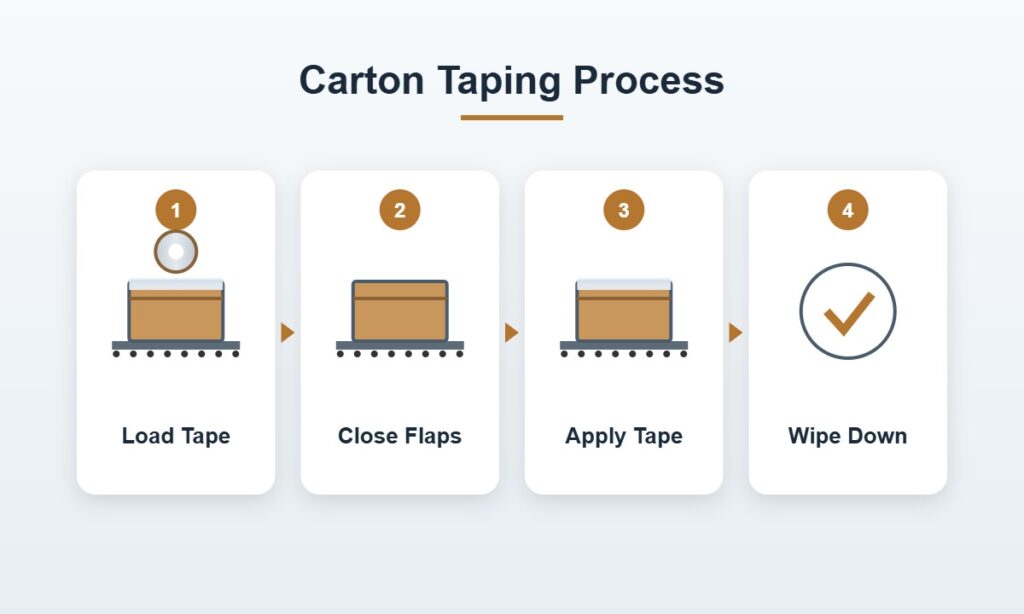
Many sealing faults come from tape loaded the wrong way. Follow the threading diagram on your taping head and check these points every time you change a roll:
- Mount the roll so the adhesive side faces the carton when it reaches the front roller.
- Thread the tape around every guide roller in the correct order; skipping one changes the tension.
- Leave a short tape end over the front roller so the next carton picks it up.
- Check that the roll turns freely but does not spin loosely; adjust the brake or tension if needed.
- Keep fingers clear of the cutting blade and use the blade guard while threading.
Common Tape Problems and Quick Fixes
- Tape not sticking to the leading face: tape end too short, front roller pressure too low, or adhesive unsuitable for the board.
- Loose or flapping tail: rear roller not pressing properly, or blade cutting too late.
- Tape breaking: tension too high, blunt blade, or film too thin for the load.
- Wrinkled tape on the flaps: flaps not closed evenly, or tape not centred on the seam.
- Frequent jams: dust or adhesive build-up on rollers and blade; clean them regularly.
For mechanical issues beyond tape – belt slipping, cartons skewing or the head not cutting – see our detailed guide on box sealing machine problems and how to fix them.
Storing Tape Rolls
Tape adhesive is affected by heat, cold and dust. Store rolls in a clean, dry place at normal room temperature, in their original cartons until use. Very cold tape may not stick well until it warms up, and tape kept in a hot area may bleed adhesive at the edges. Rotate stock so older rolls are used first.
Frequently Asked Questions
Can I use hand-dispenser tape on a box sealing machine?
It may work for a short time, but machine tape is designed for steady unwinding and quick grab at speed. Hand tape rolls are shorter and may not fit the core holder, leading to frequent changes and inconsistent seals.
Which is better for machine use, hot-melt or acrylic tape?
Neither is better in every case. Hot-melt grabs faster and suits recycled board and quick lines; acrylic is more stable over long storage and temperature changes. Test both on your cartons if you are unsure.
How often should I clean the taping head?
A quick clean of rollers and the blade area at the end of each shift helps prevent adhesive build-up. A more thorough clean and blade check should be part of your weekly maintenance.
Talk to G-Tech Packaging India
Need a carton sealer that matches your carton sizes and line speed? G-Tech Packaging India Pvt. Ltd., Ahmedabad, designs and builds automatic filling, capping, induction sealing, labeling, leak testing, shrink tunnel and box sealing machines for Indian manufacturers. Share your container, cap and output details through our contact page or write to sales@gtechpackaging.in, and our team will suggest a practical setup for your line.