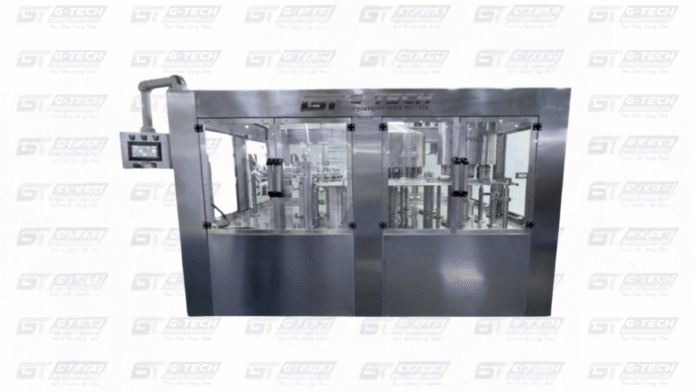

Every manufacturer reaches a point where manual or semi-automatic filling can no longer keep up with demand. Whether you’re bottling edible oil, packaging lubricants, or filling pharmaceutical liquids, the shift to automation isn’t just about speed — it’s about protecting product quality, cutting waste, and staying competitive in a market that rewards consistency.
The Real Cost of Manual Filling
Manual filling lines rely heavily on operator skill, and even the most experienced staff can’t match the repeatability of a machine. Small variations in fill volume add up over thousands of units, leading to product giveaway (overfilling) or compliance issues (underfilling). Add in slower throughput, higher labor dependency, and inconsistent sealing, and the hidden costs of staying manual quickly outweigh the upfront price of a machine.
What Automation Actually Delivers
A well-engineered liquid filling machine — whether volumetric, weighmetric, servo-driven, or piston-based — brings three things to a production line that manual processes simply can’t:
Accuracy at scale – PLC-controlled systems maintain fill precision batch after batch, container after container, regardless of shift changes or operator fatigue.
Higher throughput with less waste – Automated lines fill, cap, seal, and label in a continuous, synchronized flow, reducing bottlenecks and minimizing spillage or rework.
Flexibility across container sizes and viscosities – Modern machines are designed to handle everything from thin, free-flowing liquids to thick, viscous products like ghee or lubricant oil, and can be adjusted for different bottle or container sizes without long changeover times.
Choosing the Right Fit for Your Industry
Not every business needs the same setup. A small edible oil brand scaling up from manual operations might start with a semi-automatic or table-top filling machine, while a large-scale lubricant or pharmaceutical manufacturer will benefit more from a fully automatic, servo-driven rotary monoblock line that integrates filling, capping, and sealing in one continuous process. The right choice depends on your production volume, container types, budget, and growth plans over the next few years — not just your current output.
Automation Is a Growth Decision, Not Just an Efficiency One
Brands that invest early in reliable filling and capping machinery tend to scale faster because they’re not held back by production bottlenecks when demand increases. Consistent fill accuracy also protects brand reputation — customers notice when a product is underfilled or a cap isn’t sealed properly, and that trust is hard to win back.
With over a decade of experience building filling, capping, sealing, and labeling machines for industries ranging from edible oils and lubricants to pharmaceuticals and pesticides, G-Tech Packaging India Pvt. Ltd. designs solutions that are tailored to real production needs rather than one-size-fits-all setups. If your business is outgrowing manual packaging, it may be time to explore what a customized automated line can do for your output, your costs, and your brand consistency.