
For years, semi-automatic filling and capping lines were the default choice for small and mid-sized manufacturers in India’s edible oil, lubricant, chemical, and beverage sectors. They were affordable, easy to operate, and did the job. But the ground is shifting fast. Across packaging hubs like Ahmedabad, Vadodara, and the wider Gujarat industrial belt, more and more SMEs are moving to fully automatic, servo-driven filling systems — and the reasons go well beyond simply “keeping up with the competition.”
The Shift From Semi-Automatic to Fully Automatic
A semi-automatic line depends heavily on manual intervention at almost every stage — placing bottles, triggering the fill cycle, adjusting for size changes. That works fine at low volumes, but as order sizes grow and margins tighten, the cost of that manual dependency starts to show up in three places: labour, consistency, and downtime.
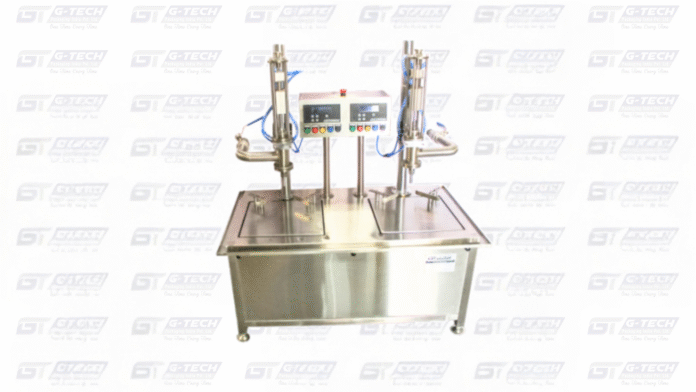
Fully automatic, servo-driven systems remove much of that dependency. A servo motor gives you precise, repeatable control over fill volume, speed, and timing — which means:
Higher throughput without a proportional increase in headcount
Tighter fill accuracy, reducing product giveaway (a real cost when you’re filling thousands of bottles of edible oil or lubricant a day)
Faster changeovers between bottle sizes and viscosities, since settings can be stored and recalled electronically rather than manually re-adjusted
Why Viscosity and Bottle-Size Flexibility Matters More Than Ever
One of the biggest headaches for packaging lines serving edible oil, lubricant, and chemical products is variability — different viscosities, different bottle shapes, different batch sizes depending on the client or season. A machine that can only handle one product profile efficiently forces you into costly downtime every time the line changes over.
This is why customizable automation — machines built to handle a range of bottle sizes and viscosities with minimal manual recalibration — has become a top priority for buyers rather than a nice-to-have. It directly affects how many SKUs a single line can support and how quickly a plant can respond to new orders.
The Business Case: More Than Just Speed
It’s tempting to think of automation purely in terms of “more bottles per hour.” But the real return on investment usually comes from a combination of factors:
Reduced product loss from over-filling, which compounds significantly at scale
Lower long-term labour cost, even after accounting for the higher upfront machine cost
Better consistency, which matters for brand reputation and for meeting quality specifications on B2B contracts
Reliability and after-sales support, which determines how much unplanned downtime a plant actually experiences over a machine’s lifetime
That last point is often underestimated. A machine that’s 10% faster on paper but breaks down twice a month isn’t actually saving you money. Buyers evaluating automation investments should weigh long-term reliability and vendor support as heavily as raw speed specifications.
What This Means If You’re Evaluating a New Line
If your plant is still running semi-automatic equipment, the questions worth asking before you upgrade are:
How many different bottle sizes or product viscosities does our line need to handle in a typical month?
What is our current product giveaway per bottle, and what would even a 1–2% improvement in fill accuracy save annually?
How much unplanned downtime do we experience, and how is it distributed across changeovers versus mechanical faults?
What does the vendor’s after-sales support and spare-parts availability actually look like in practice?
Made-in-India packaging automation has matured considerably over the past decade, and domestic manufacturers now offer servo-driven filling, capping, and labeling systems that are both cost-competitive and built for the specific demands of edible oil, lubricant, chemical, and beverage packaging. For SMEs weighing the jump from semi-automatic to fully automatic, the case is increasingly less about “if” and more about “when” — and how to choose a line that will keep pace with the business for years, not months.