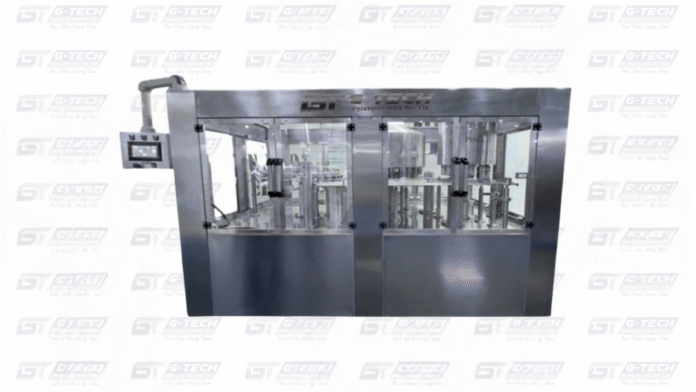
On many bottling lines the capping machine itself is fast and reliable, yet output still falls short. Very often the reason is not the capping head but the way caps reach it. An operator tipping caps into a small bowl by hand, caps jamming in the chute, or the bowl running empty for a few seconds every few minutes all slow the line down. A cap elevator for capping machine lines solves this by lifting caps from a large floor-level hopper and feeding them steadily to the cap sorter or chute.
This guide explains how a cap elevator works, when your line needs one, how to choose the right type, and how to keep it running smoothly. It is written for plant owners and production managers in edible oil, lubricant, pesticide, pharma and personal care packaging.
What Is a Cap Elevator?
A cap elevator is an inclined conveyor with a hopper at the bottom. Caps are emptied in bulk into the hopper, and a cleated belt carries them upward and drops them into the cap sorting unit or directly into an orienting chute that leads to the capping head. It works together with automatic capping machines, screw cappers, ROPP cappers and press-on cappers.
Because the hopper sits at a comfortable height near the floor, operators can load a full bag or carton of caps safely, instead of climbing up to fill a bowl mounted high on the machine.
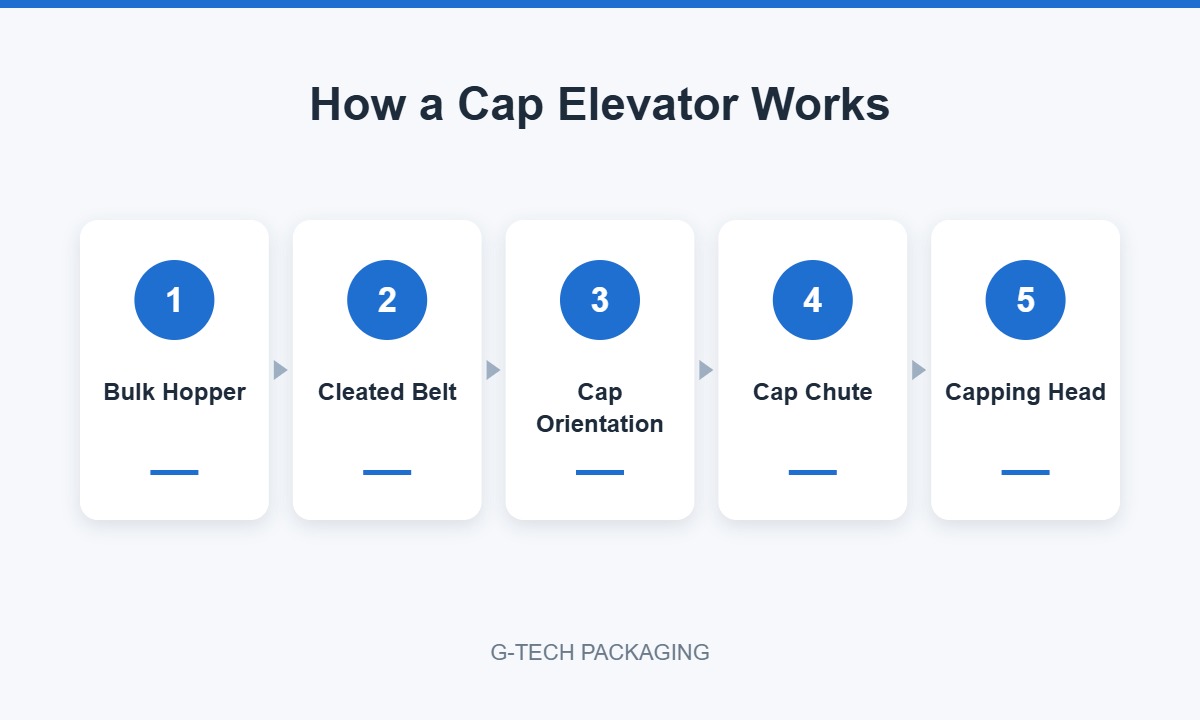
How a Cap Elevator Works, Step by Step
- Bulk hopper: caps are loaded in bulk at the bottom, usually holding enough for a long run.
- Cleated belt: a belt with small cleats or steps lifts a controlled quantity of caps upward.
- Orientation: wrongly placed caps fall back into the hopper, while correctly seated caps continue, either in the elevator itself or in a separate sorter.
- Cap chute: oriented caps slide down a chute sized to the cap diameter.
- Capping head: the cap is picked or placed on the bottle neck and tightened or crimped.
A level sensor in the chute or sorter tells the elevator when to run and when to pause. This keeps a steady buffer of caps without overfilling and crushing them.
Signs Your Line Needs a Cap Elevator
- Operators refill the cap bowl many times in a shift.
- The capping machine stops because the chute runs empty.
- Caps get scratched or deformed from being dropped into the bowl from height.
- You are increasing line speed or adding a second shift.
- You want to reduce manual handling near moving parts for safety.
If you run a rotary monoblock filling and sealing machine, a consistent cap supply becomes even more important, because a short cap gap stops filling and capping together.
Types of Cap Feeding Systems Compared
| Feeding method | How it works | Best suited for |
|---|---|---|
| Manual bowl filling | Operator pours caps into the sorter bowl | Low output, small batches |
| Vibratory bowl feeder | Vibration moves and orients caps in a bowl | Small, light caps and moderate speeds |
| Cap elevator with sorter | Belt lifts caps to a sorter or chute from a low hopper | Medium to high output, long runs |
| Cap elevator with direct orientation | Cleated belt both lifts and orients caps | Simple cap shapes, space-saving lines |
The right choice depends on cap shape, weight, material and the speed of your capping machine. A cap supplier sample is the best way to confirm compatibility before ordering.
How to Choose the Right Cap Elevator
1. Cap size and shape
Flat screw caps, flip-top caps, ROPP aluminium caps, trigger sprayers and tall dispenser caps all behave differently. Share physical samples with your machine maker so the belt cleats, chute width and orientation method can be matched.
2. Required output
The elevator should supply caps a little faster than the capping head consumes them, so the chute always has a buffer. Discuss your target bottles per minute rather than a generic speed figure.
3. Hopper capacity
A larger hopper means fewer refills, but very large loads can press on fragile caps. Pick a capacity that matches how often an operator can comfortably check the line.
4. Material of construction
For pharma, food and personal care lines, stainless steel contact parts and easy-clean surfaces are preferred. For pesticide and chemical plants, corrosion resistance matters.
5. Controls and integration
Level sensors, an emergency stop, and interlocking with the capping machine prevent jams. Ask whether the elevator can stop automatically when the chute is full and restart when the level drops.
Industries That Benefit Most
Edible oil and lubricant plants often run long batches of the same cap, which suits an elevator well. Pesticide and agro-chemical packers handle many cap types across seasons, so quick changeover of chutes is useful. Pharma and personal care lines value the reduced manual handling and cleaner cap supply.
Maintenance and Troubleshooting Tips
- Clean the hopper and belt regularly to remove dust and broken cap pieces.
- Check belt tension and cleat condition; worn cleats lift fewer caps.
- Keep the level sensor clean so it reads the cap buffer correctly.
- If caps jam in the chute, check the chute width for that cap size and look for burrs on the caps.
- If caps arrive upside down, recheck the orientation setting after every changeover.
Cap feeding problems often show up as torque or sealing issues later. Our guide on ROPP capping machines explains how the capping head itself should be set up.
Frequently Asked Questions
Can a cap elevator be added to an existing capping machine?
In many cases, yes. The elevator is a separate unit that feeds the existing sorter or chute. The machine maker will check mounting height, chute design and electrical interlocks before fitting it.
Does a cap elevator orient the caps?
Some designs only lift caps to a separate sorter, while others orient caps on the belt itself. Which one suits you depends on the cap shape and line speed.
Is a cap elevator useful for low-speed lines?
It can still help by reducing operator effort and cap damage, but the biggest gains come on medium and high output lines that run long shifts.
Talk to G-Tech Packaging India About Your Line
G-Tech Packaging India Pvt. Ltd., Ahmedabad, designs and builds automatic liquid filling, capping, induction sealing, labeling, leak testing, shrink tunnel and box sealing machines for Indian manufacturers. If you are planning a new capping line or want to add a cap elevator to your existing capping machine, share your container sizes, product details and target output with our team and we will suggest a practical setup. Contact us here or email sales@gtechpackaging.in.