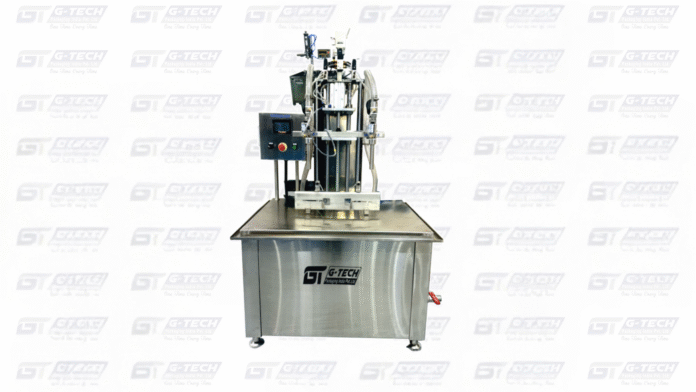
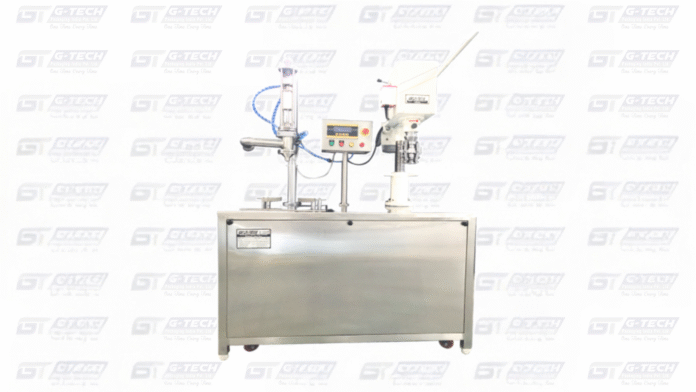
A good filling machine can still give poor results in untrained hands. Wrong fill quantities, frequent stoppages, product spills and avoidable breakdowns are often traced back to how the machine is run, not how it was built. That is why filling machine operator training deserves as much attention as the machine purchase itself.
This article lays out a practical training roadmap for operators of automatic liquid filling lines in Indian plants, from safety basics to daily checks, along with tips on making the training stick when staff change.
Why Operator Training Matters
- Consistent fill quantity: trained operators know how to check and adjust fills before small errors become big losses.
- Less downtime: operators who understand the machine can clear simple faults quickly instead of waiting for a technician.
- Longer machine life: correct start-up, shutdown and cleaning reduce wear on pumps, valves and seals.
- Safer work: people who know where the hazards are take fewer risks near moving parts.
- Smoother audits: recorded checks and settings support quality and compliance reviews.
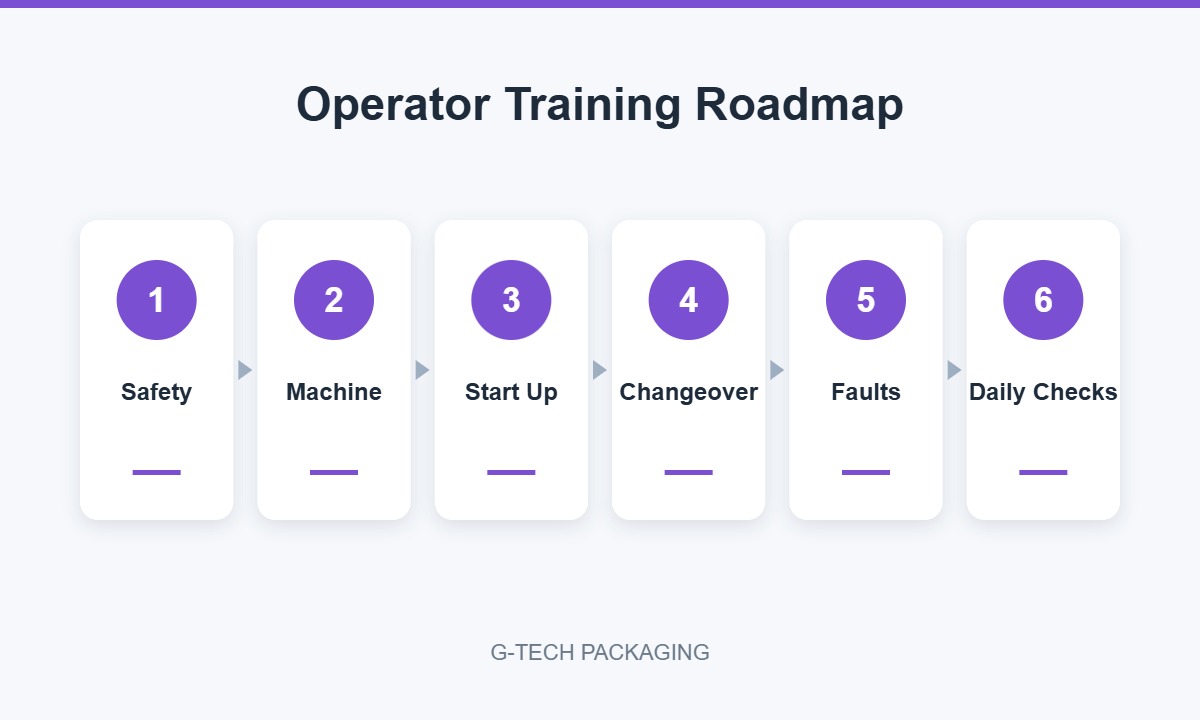
A Six-Step Operator Training Roadmap
Step 1: Safety basics
Start with emergency stop locations, guard interlocks, safe lockout before cleaning or adjustment, handling of hot or hazardous products, and correct personal protective equipment. Nobody should touch the machine before this step is complete.
Step 2: Machine parts and their purpose
Walk the operator through the product tank, pump or piston, nozzles, conveyor, sensors and control panel. On a volumetric oil filling machine, for example, explain how the measured volume is set and why air in the line affects accuracy.
Step 3: Start-up and shutdown
Teach the correct sequence: checking product supply, priming the system, running test fills, checking quantities and only then starting production. Shutdown should include draining or flushing as specified and leaving the machine clean.
Step 4: Changeover
Show how to change bottle size or product: adjusting guides and nozzle height, changing quantity settings and running trial fills. Written changeover sheets for each bottle size save time and avoid guesswork.
Step 5: Fault finding
Operators should recognise common symptoms such as dripping nozzles, short fills, foaming, bottles not stopping under nozzles or sensors not detecting containers, and know the first checks for each. Anything beyond that should be escalated to maintenance.
Step 6: Daily checks and records
Fill quantity checks at the start of each shift and at regular intervals, cleaning records, and a simple log of stoppages give supervisors the data they need to spot problems early.
Training Across the Whole Line
Filling is only one station. Operators should also understand the machines before and after it, such as capping, induction sealing and labeling. A fault in one machine often shows up as a problem in the next, for example a loose cap that leads to a poor induction seal.
| Station | Key operator skill | Common mistake to avoid |
|---|---|---|
| Filling | Checking and adjusting fill quantity | Skipping test fills after changeover |
| Capping | Watching cap placement and tightness | Ignoring loose or tilted caps |
| Induction sealing | Keeping bottles centred under the head | Running with the wrong height setting |
| Labeling | Loading label rolls correctly | Leaving adhesive buildup on rollers |
Making Training Stick
- Use simple, picture-based work instructions near the machine, in the language operators use daily.
- Pair new operators with experienced ones for the first weeks.
- Hold short refresher sessions when a new product or bottle is introduced.
- Ask your machine supplier to train key staff at installation and keep a copy of the manuals on site.
- Keep a skills matrix so you know who is trained on which machine.
Training is easiest to plan right at installation. Our packaging machine installation checklist shows how to include operator handover in the sign-off.
Training Tips for Specific Industries
In edible oil plants, operators should understand how temperature affects oil flow and why fill checks matter more in winter. In pesticide and chemical plants, safe handling and spill response are critical. In pharma and food plants, hygiene, cleaning and record keeping need extra focus.
Measuring Whether Training Is Working
Training only pays off if results improve on the line, so track a few simple measures before and after. Watch how often fill checks are out of tolerance, how long a bottle size changeover takes, how many stoppages happen per shift and what causes them, and how much product is lost to spills or rejects. If one operator consistently takes longer on changeovers or has more stoppages, that points to a specific gap you can cover with extra coaching. Review these numbers monthly with supervisors and update the work instructions whenever the same mistake keeps coming up. Over time, this turns training into a routine part of running the line rather than a one-time event at installation.
Frequently Asked Questions
How long does filling machine operator training take?
Basic operation can usually be learned within a few days of guided practice, but confidence in changeovers and fault finding builds over several weeks of supervised work.
Who should train operators on a new machine?
The machine supplier should train key staff at installation. After that, an experienced in-house operator or supervisor can train new staff using written instructions.
What records should operators maintain?
At minimum, fill quantity checks, cleaning records, changeover details and a log of stoppages with their causes.
Talk to G-Tech Packaging India About Your Line
G-Tech Packaging India Pvt. Ltd., Ahmedabad, designs and builds automatic liquid filling, capping, induction sealing, labeling, leak testing, shrink tunnel and box sealing machines for Indian manufacturers. If you are planning operator training as part of a new filling line, or need guidance for an existing machine, share your container sizes, product details and target output with our team and we will suggest a practical setup. Contact us here or email sales@gtechpackaging.in.