On many filling lines the filling machine is fast enough, the capper is fast enough, and yet output stays low. Often the real bottleneck is at the two ends of the line: bottles are fed in by hand, one at a time, and finished bottles pile up at the end while the packing team catches up. A simple machine solves both problems – the bottle turntable.
This guide explains how a bottle turntable for filling line infeed and outfeed works, how to choose the right size and speed, and how to set it up so it supports your liquid filling machine rather than causing new jams.
What a Bottle Turntable Does
A bottle turntable is a round, slowly rotating table, usually with a stainless steel frame and a smooth top surface, surrounded by guide rails. It can be used in two ways:
- Infeed (unscrambling) turntable: operators load empty bottles onto the table in bulk. As it rotates, guide rails steer bottles towards the edge and into a single file that enters the conveyor feeding the filling machine.
- Outfeed (accumulation) turntable: at the end of the line, filled, capped and labeled bottles flow onto the table and collect there, giving the packing team a buffer so the line does not have to stop.
In both cases the turntable acts as a buffer. It absorbs short gaps and delays so that the main machines keep running at a steady speed.
Infeed vs Outfeed Turntable
| Point | Infeed turntable | Outfeed turntable |
|---|---|---|
| Position | Before the filling machine | After capping or labeling |
| Main job | Turn bulk bottles into a single file | Collect finished bottles for packing |
| Operator role | Loads empty bottles in batches | Picks bottles for cartons |
| Main benefit | Steady feed, fewer manual loaders | No line stops when packing is slow |
How to Choose the Right Turntable
- Bottle shape: round, stable bottles feed best. Oval, flat or tall narrow bottles may tip or need extra guiding.
- Bottle size range: make sure guide rails and the exit chute can be adjusted for all your sizes.
- Table diameter: a larger table holds more bottles, which means a longer buffer before the operator must reload or unload.
- Speed control: a variable speed drive lets you match the turntable to the conveyor and filling speed.
- Height match: the table top should line up smoothly with the conveyor so bottles pass without a step.
- Material: stainless steel construction suits wash-down areas in food, dairy and water plants.
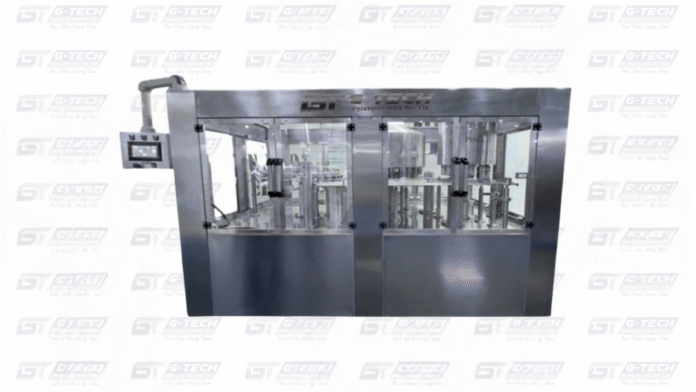
Turntables are widely used on packaged water and beverage lines, and they pair well with a rotary monoblock filling and sealing machine, where a steady single-file feed is important for consistent output.
Setting Up the Turntable for Smooth Flow
- Set the turntable speed slightly faster than the conveyor so the exit lane stays full, but not so fast that bottles crash into each other.
- Adjust the guide rails to leave a small clearance around the bottle, enough to move freely without wobbling.
- Make sure the transfer plate between table and conveyor is level and smooth.
- Do not overload the table; a single layer of bottles moves better than a crowded heap.
- Use line sensors where possible so the turntable slows or stops if the conveyor backs up.
Where the Turntable Fits in Your Line Layout
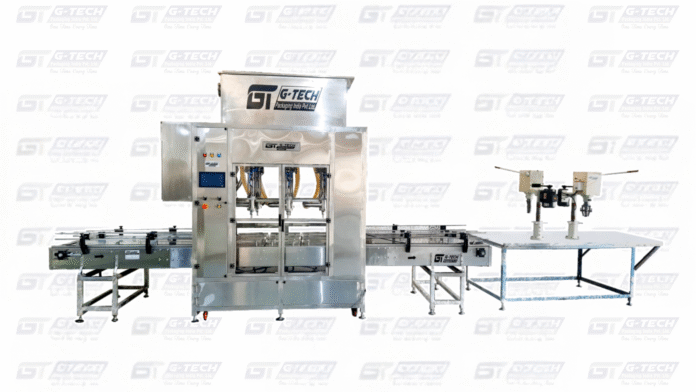
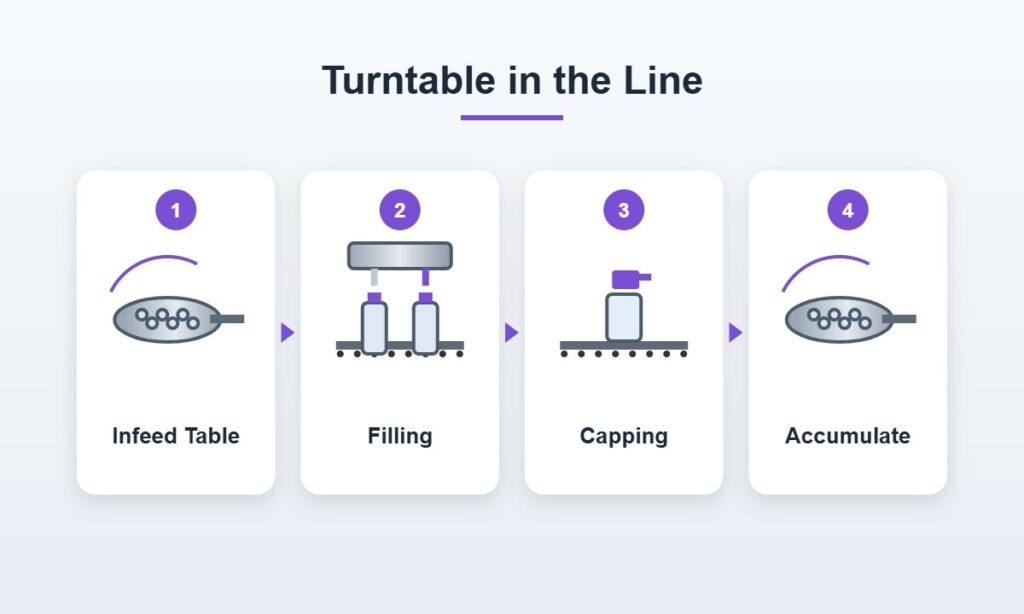
A typical layout places the infeed turntable at the start, followed by the filling machine, capping machine, induction sealer and labeler, with an accumulation turntable or packing table at the end. Planning floor space for the turntables at the design stage avoids awkward bends and transfers later. For a full walkthrough of line planning, read our guide on bottle filling line layout.
Maintenance Tips
Turntables are simple machines, but a little care keeps them reliable. Wipe the table top and rails daily to remove spilled product and dust, which can make bottles stick or tip. Check the drive and gearbox for unusual noise, keep fasteners tight, and inspect the guide rail edges for wear that could scratch bottles.
Is a Turntable Worth It for a Small Line?
Even on smaller semi-automatic or automatic lines, a turntable can free up an operator who would otherwise stand at the conveyor placing bottles one by one. It also reduces stops caused by packing delays. The return comes from steadier output and better use of manpower, rather than from higher machine speed.
Frequently Asked Questions
Can a turntable handle square or flat bottles?
It can, but these shapes are more likely to tip or jam. Extra guiding, slower speed or manual orientation may be needed. Test with your actual bottles before deciding.
Do I need turntables at both ends of the line?
Not always. Many lines start with an infeed turntable only. An outfeed turntable is useful when packing is done by hand and cannot always keep pace with the line.
Can a turntable be added to an existing filling line?
Usually yes, provided the conveyor height and space allow it. The turntable speed should be matched to the existing conveyor and filling machine.
Talk to G-Tech Packaging India
Want to remove manual feeding and packing delays from your line? G-Tech Packaging India Pvt. Ltd., Ahmedabad, designs and builds automatic filling, capping, induction sealing, labeling, leak testing, shrink tunnel and box sealing machines for Indian manufacturers. Share your container, cap and output details through our contact page or write to sales@gtechpackaging.in, and our team will suggest a practical setup for your line.